Sign Up
Find ID / Password
Social Login
Your ID is .
Password Changed
Your password has been changed.
Please log in with your new password.
Sky Eye Clinic
Vision Correction Surgery
Presbyopia · Cataract
Retina
Complication Prevention Program
Consultation · Reservation
Equipment Introduction


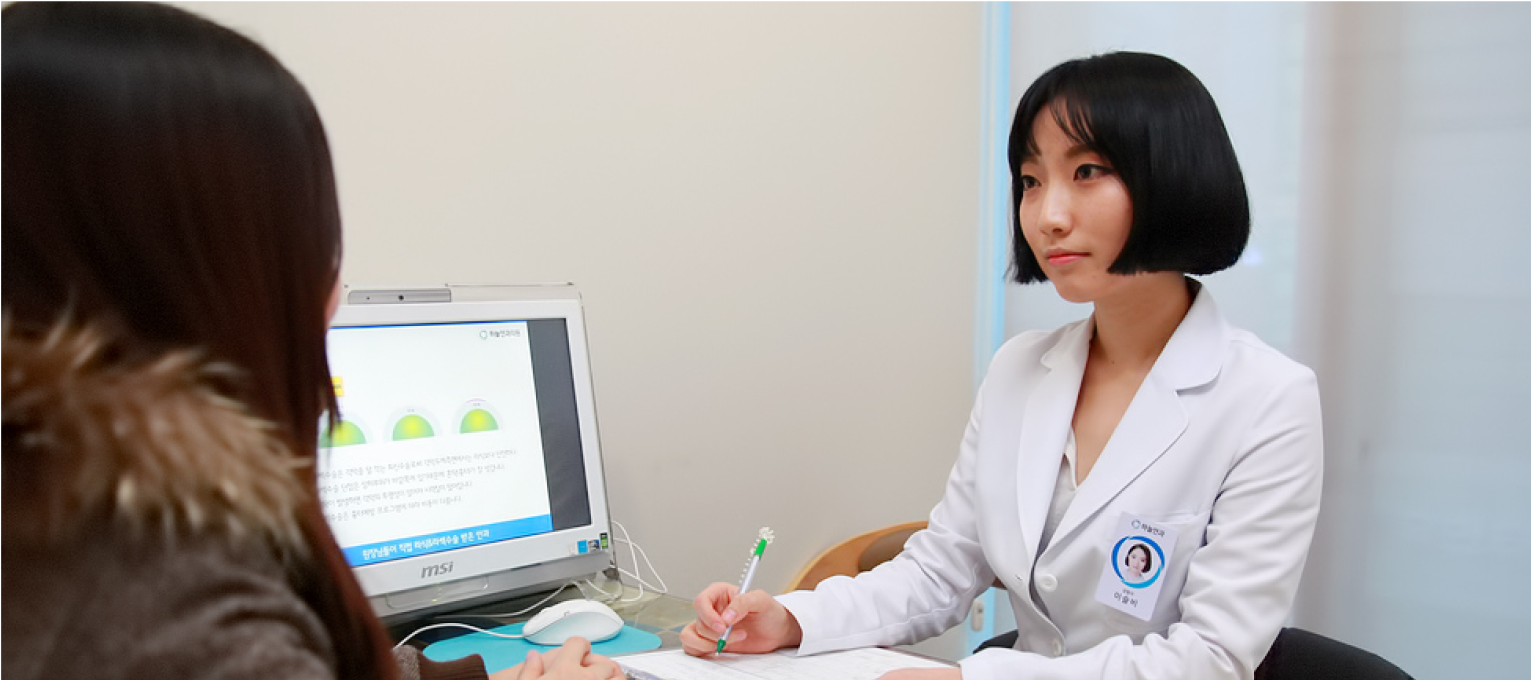
The interview is a conversation between patient and doctor, providing the most fundamental data for surgery.
By understanding past medical history, patient's subjective symptoms, and family history,
it helps establish treatment direction and processes after surgery, minimizing post-operative complications.
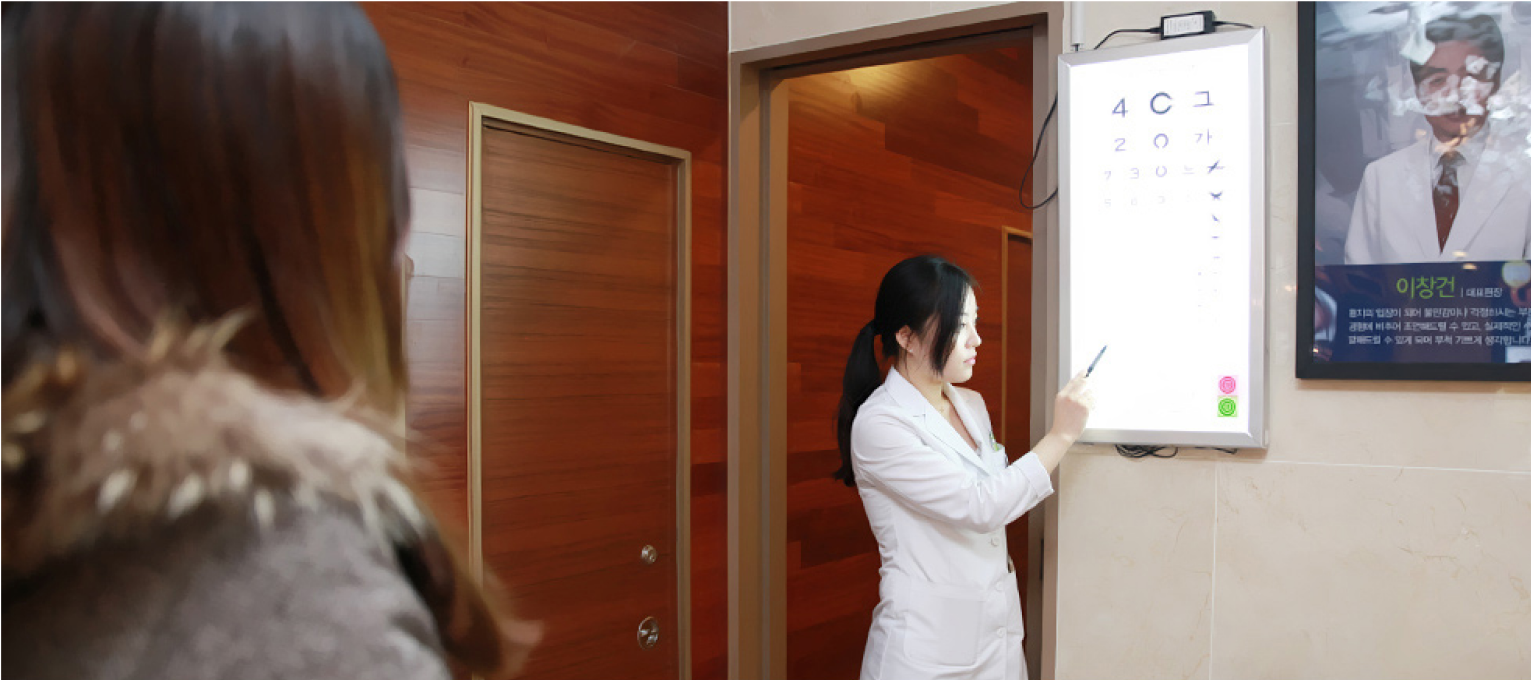
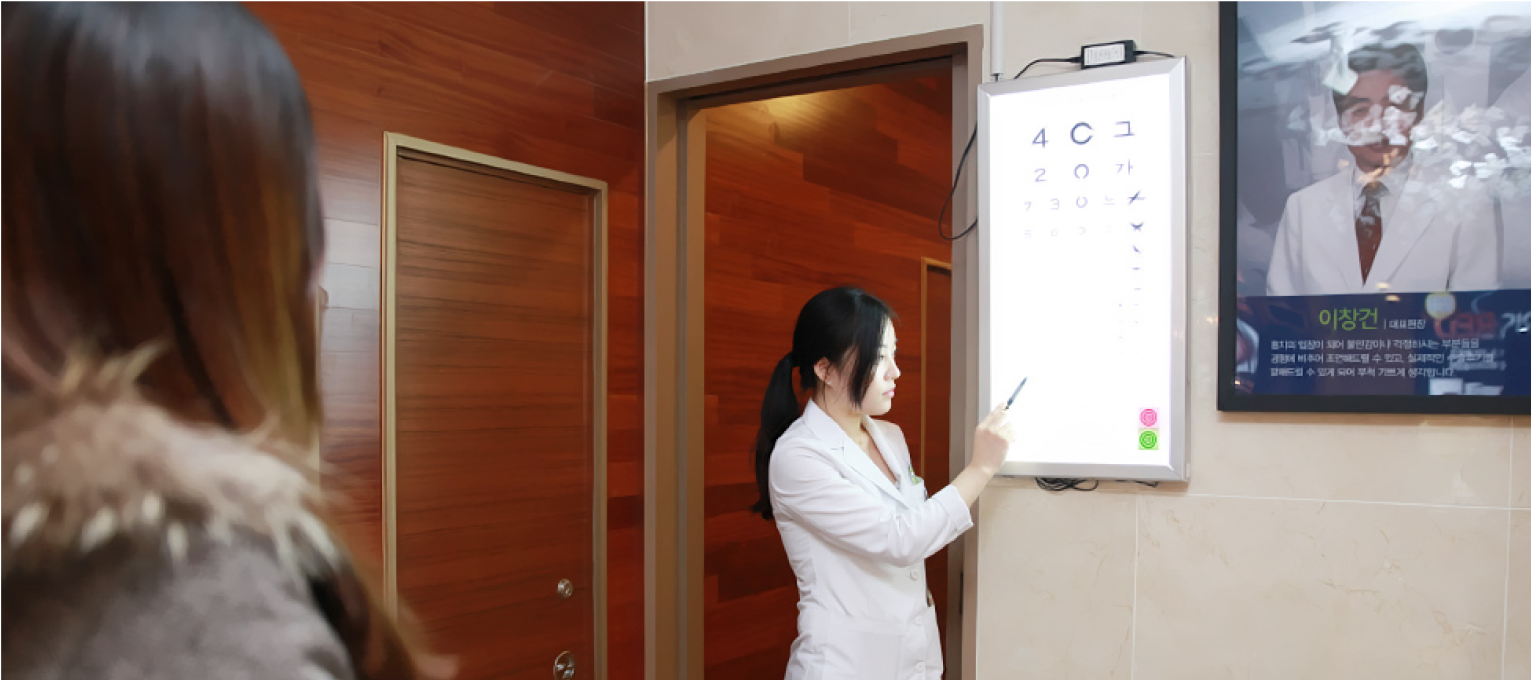
This test measures visual acuity without glasses or contact lenses from approximately 3m distance.
The line you can read determines your visual acuity, usually expressed as 0.1, 1.0, 1.2, etc.
If the patient's refractive error is severe, even 0.1 may not be visible,
making the measurement itself less meaningful.
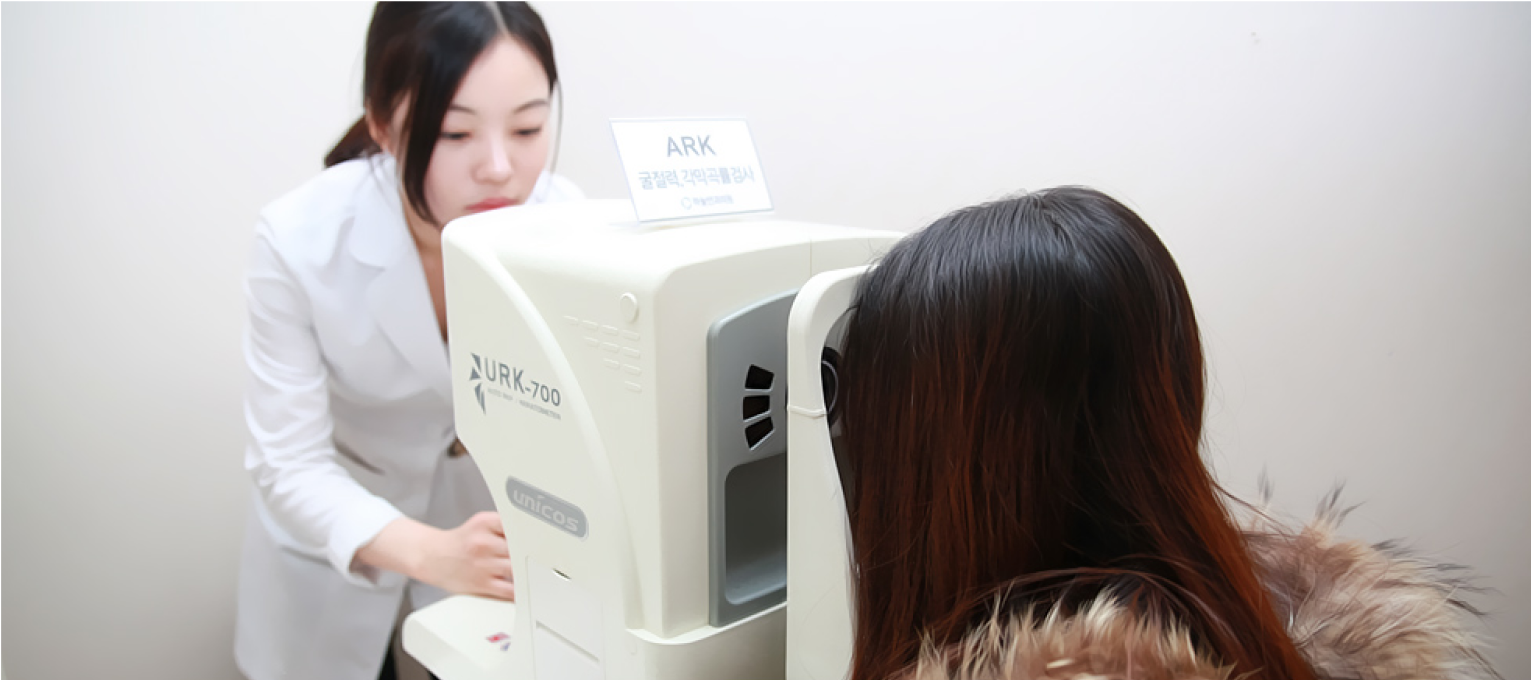
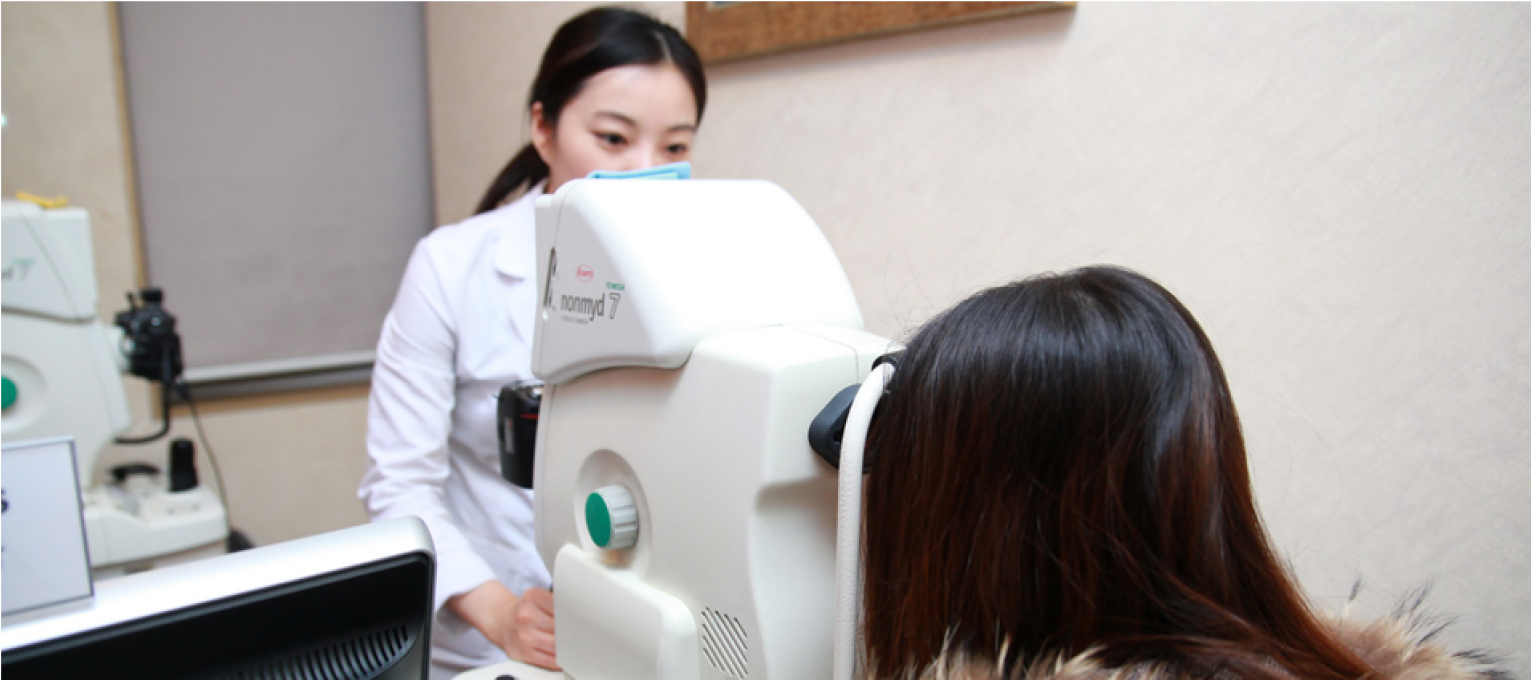
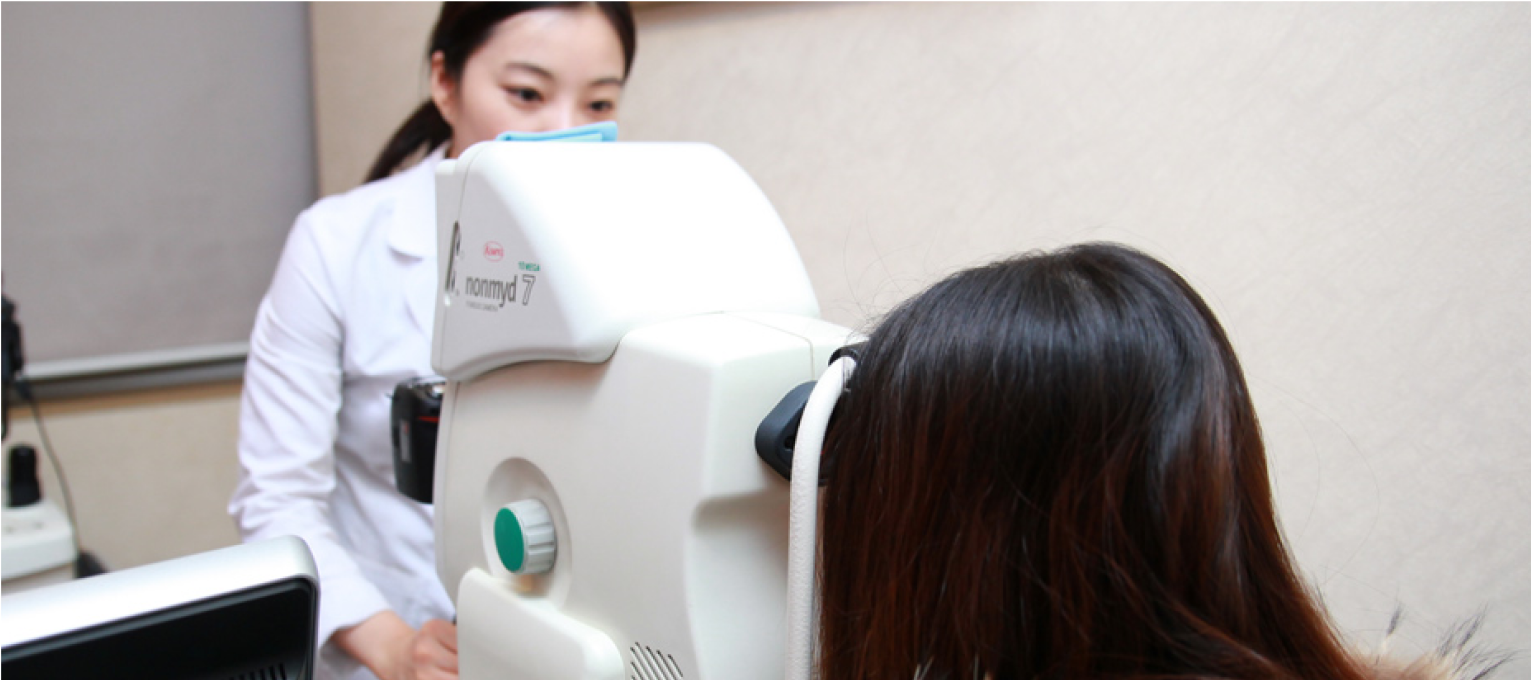
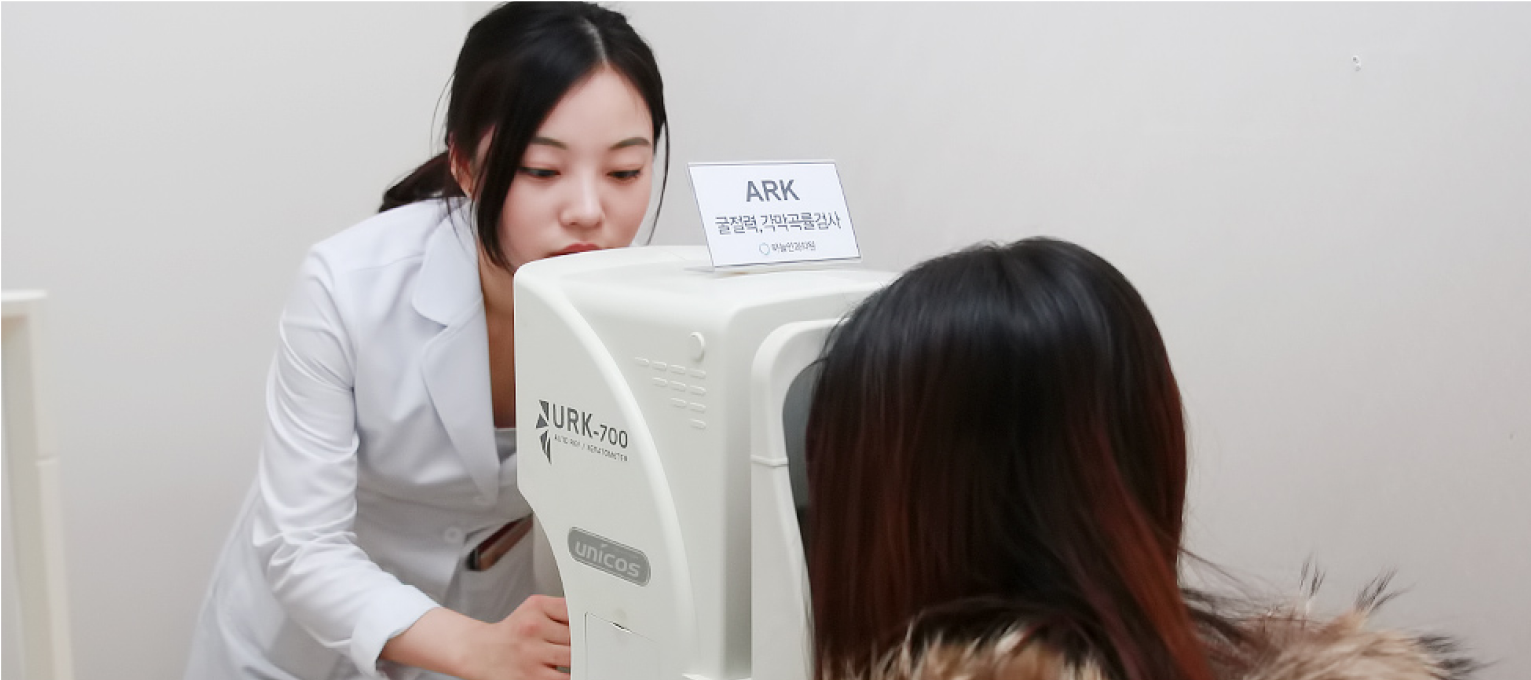
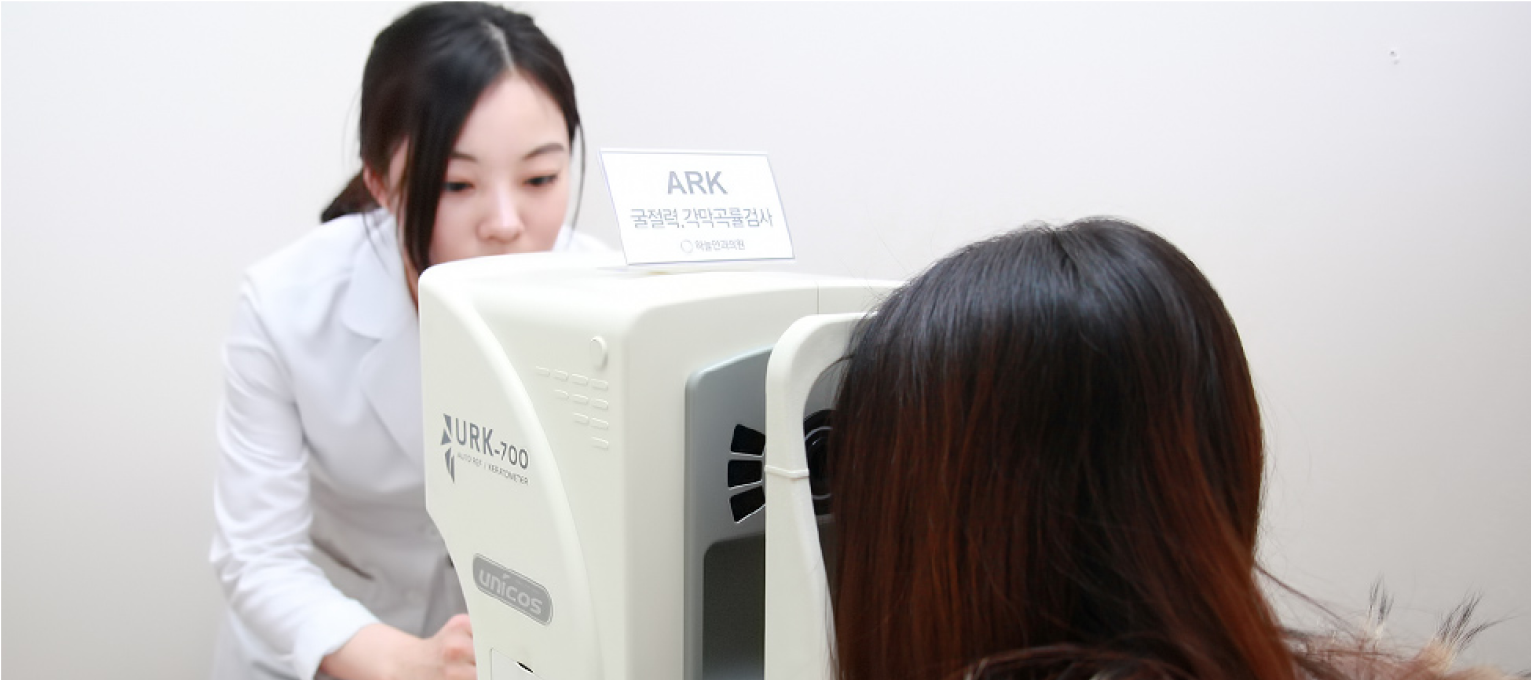
Auto-refraction test measures the degree of refractive error in the eye, forming the basis for surgery.
It is an essential pre-operative test for refractive surgery, diagnosing myopia, hyperopia, astigmatism, and other refractive errors.
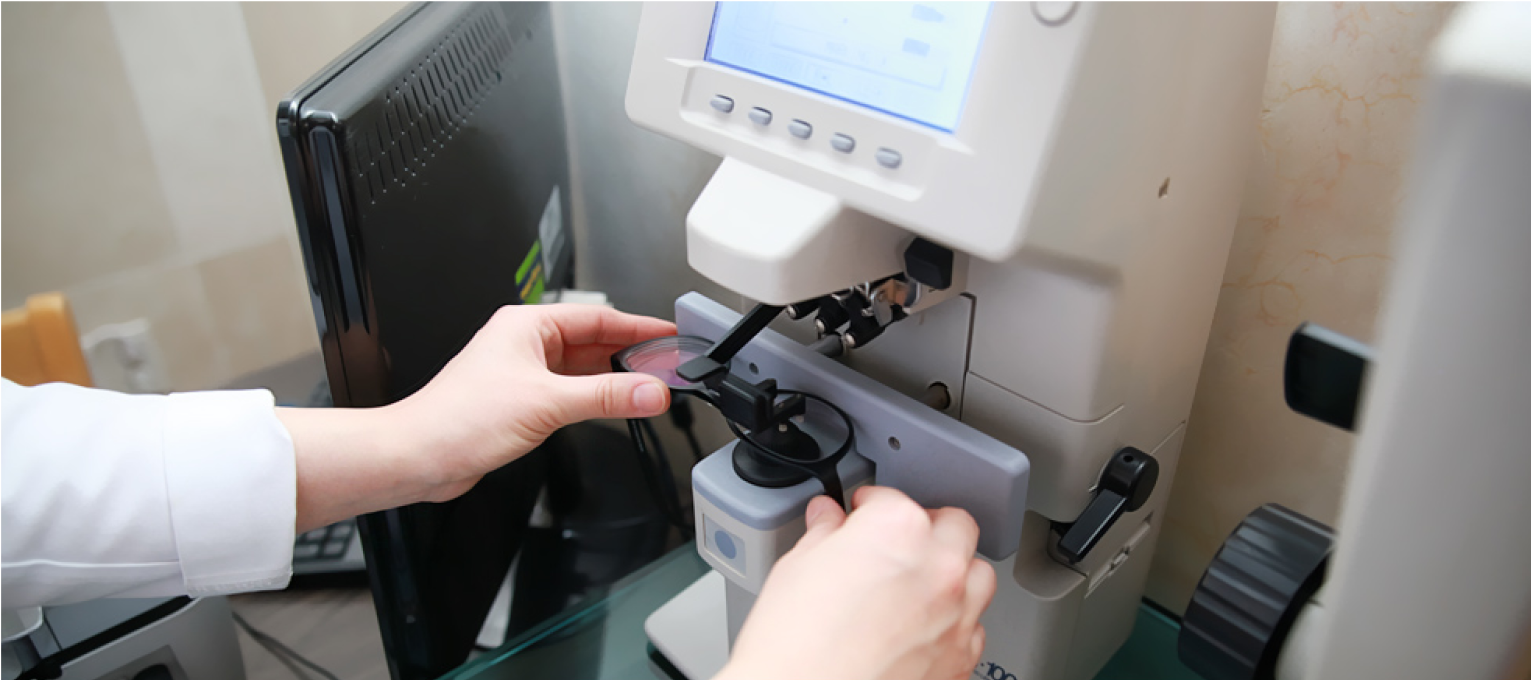
This test examines the prescription of your current glasses to determine if the glasses are properly fitted for your myopia, astigmatism, hyperopia, and other aberrations.
This test can verify the myopia, astigmatism, astigmatism axis direction, and hyperopia power of the glasses.
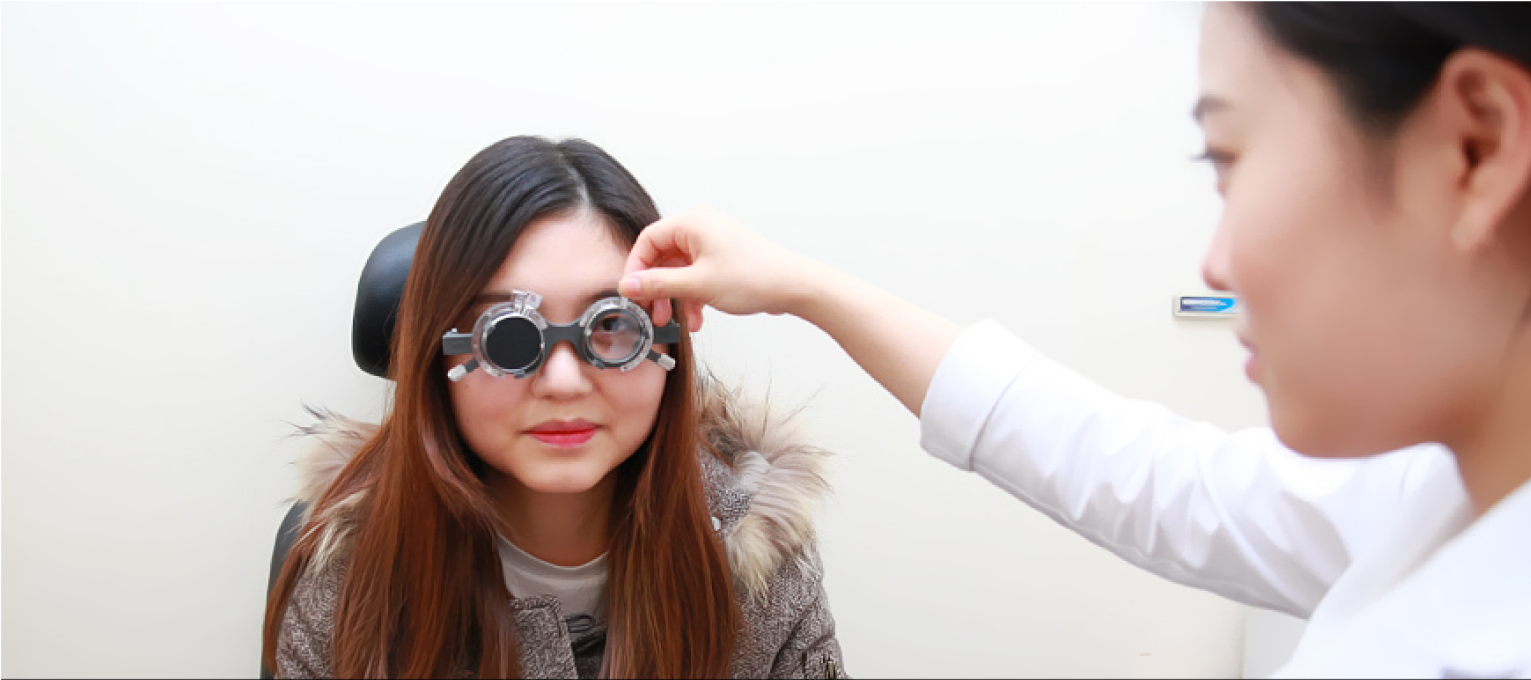
Manifest refraction test can identify the patient's myopia, astigmatism, hyperopia, astigmatism axis direction, uncorrected visual acuity, best-corrected visual acuity, and other conditions. For standard LASIK surgery, the amount of cornea to be ablated by laser is determined based on the best-corrected visual acuity from this test.
Theoretically, this best-corrected visual acuity is the maximum uncorrected visual acuity achievable after surgery, but in high myopia, regression may cause differences from the target vision, so thorough pre-operative consultation is recommended.
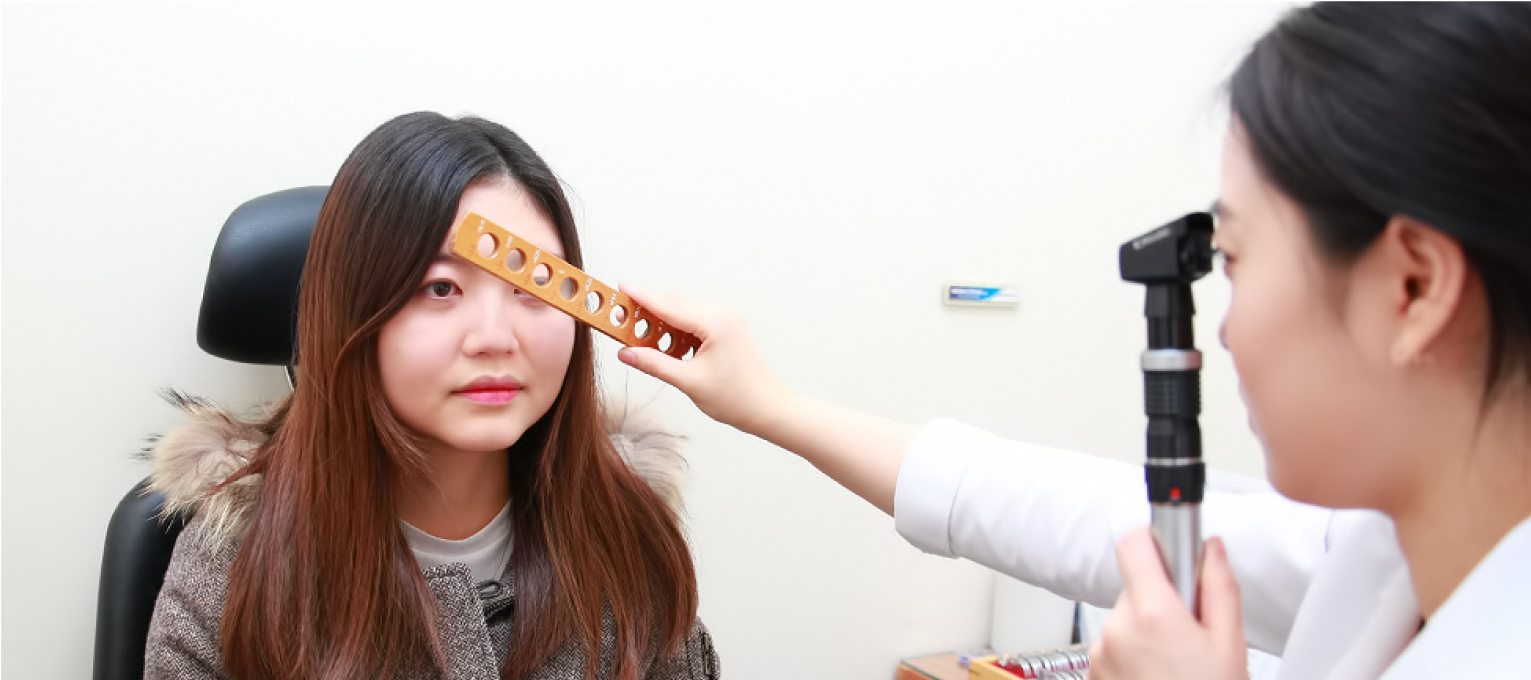
Cycloplegic refraction test measures the pure refractive error of the eye by relaxing the ciliary muscle holding the lens, eliminating variable factors such as pseudomyopia or latent hyperopia.
After the test, glare and near vision reduction occur for about 5-7 hours, but these symptoms naturally disappear as the medication effect wears off.
Post-cycloplegic refraction test is a manifest refraction test performed 3-4 days after the cycloplegic refraction test when the medication effect has worn off.
This test reconfirms the refractive error status including myopia, astigmatism, and hyperopia.


This examines the refractive error of the eye.
By objectively and subjectively testing the eye's refractive error, it determines the uncorrected and corrected visual acuity.
This examines the corneal curvature radius and refractive power, which indicate corneal flatness.
The corneal curvature test can identify keratoconus and provides important data for creating corneal flaps in LASIK surgery.
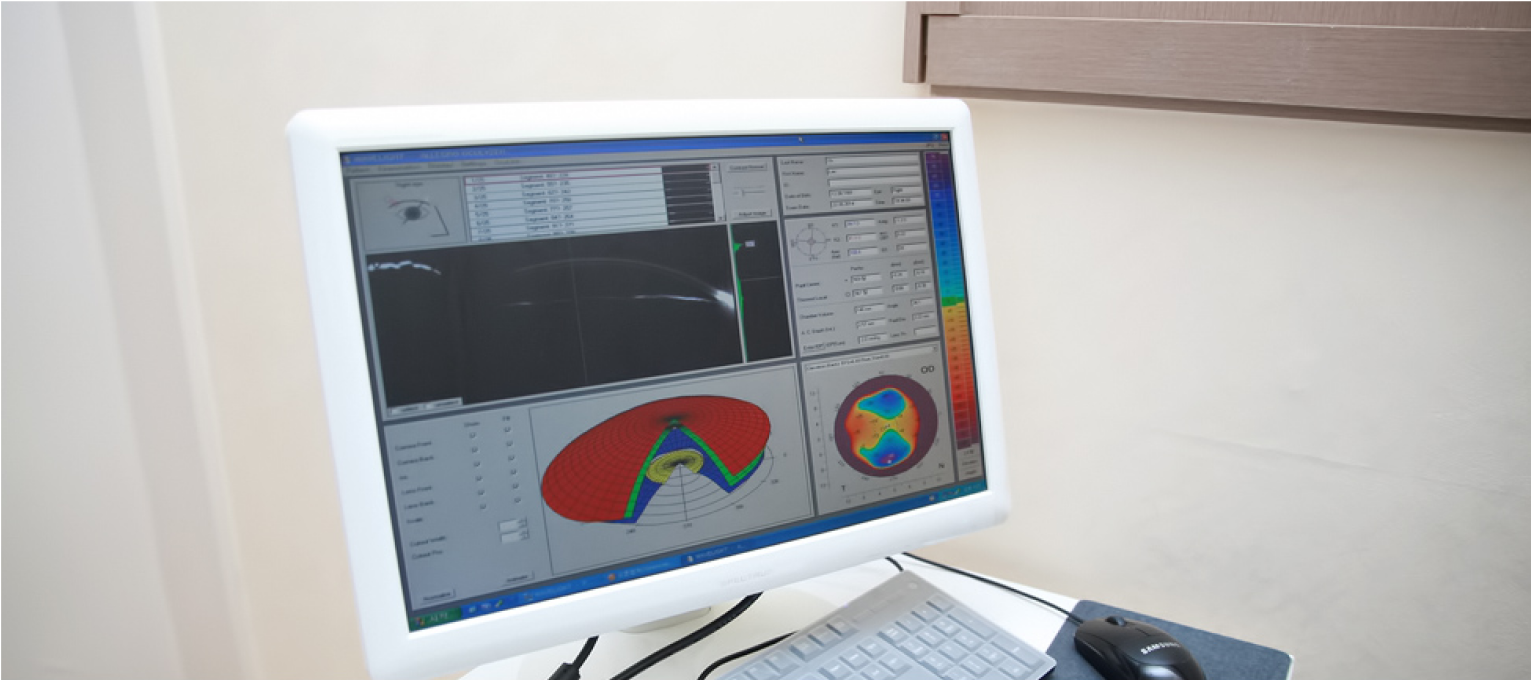
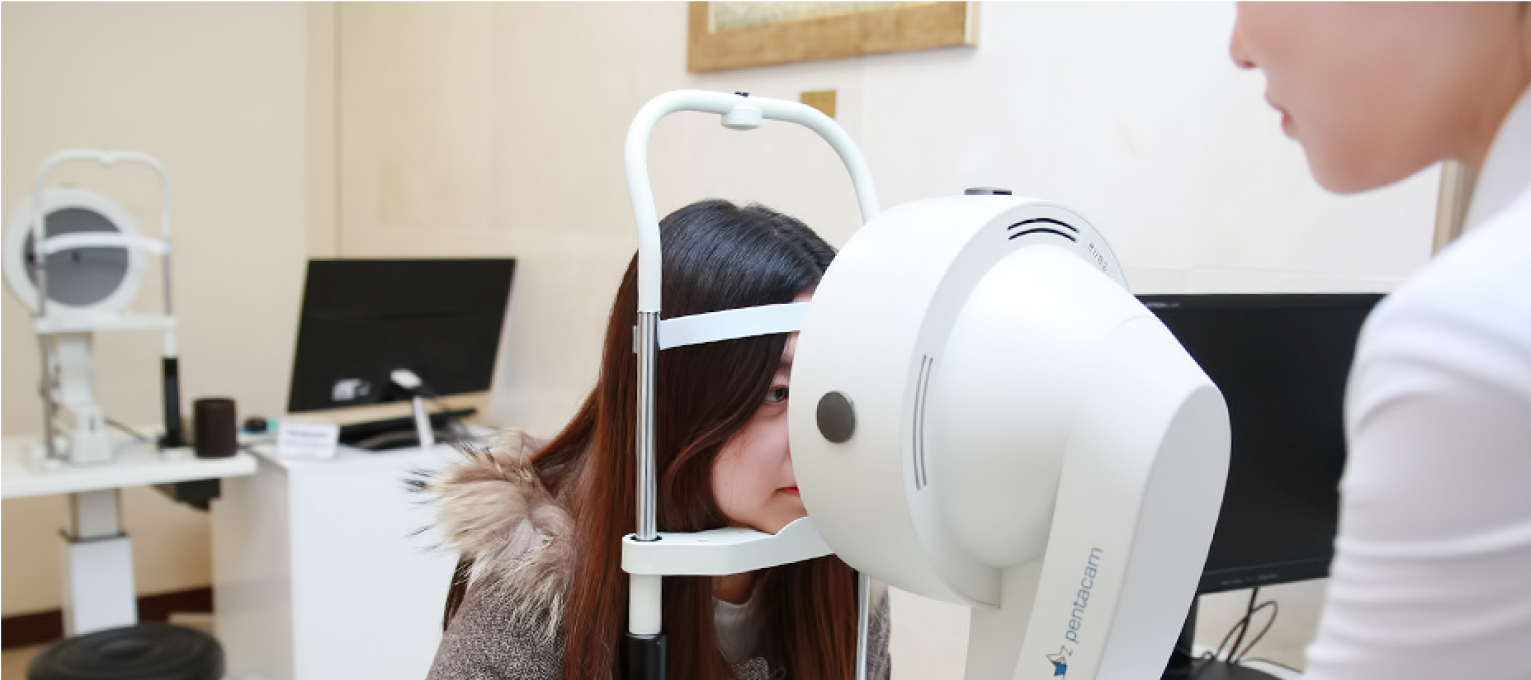
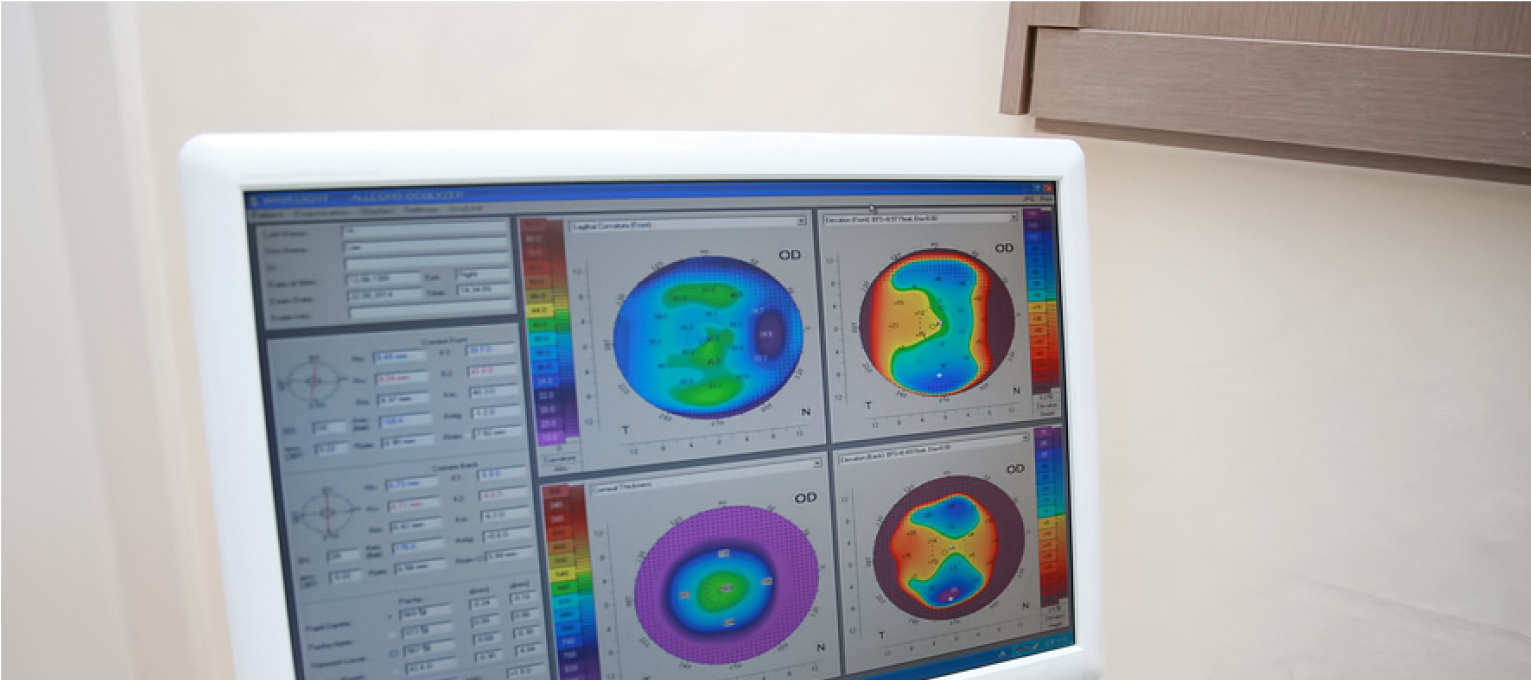
This examines the topography of the anterior and posterior corneal surfaces.
To prevent post-operative corneal ectasia, it identifies congenitally weak corneas
and ensures sufficient residual cornea after ablation.
This captures cross-sectional images of all corneal layers including endothelium, stroma, and epithelium, pre-diagnosing keratoconus, corneal dystrophy, and corneal dysfunction to prevent complications.


Most values can be corrected through standard vision correction surgery.
However, higher-order aberrations may increase after surgery, causing night glare or halos.
Aberration analysis is an essential diagnostic equipment for wavefront surgery, examining not only refractive power but also higher-order aberrations to minimize surgical errors.
Accurate examination including higher-order aberrations of the eye is necessary for wavefront-guided surgery.
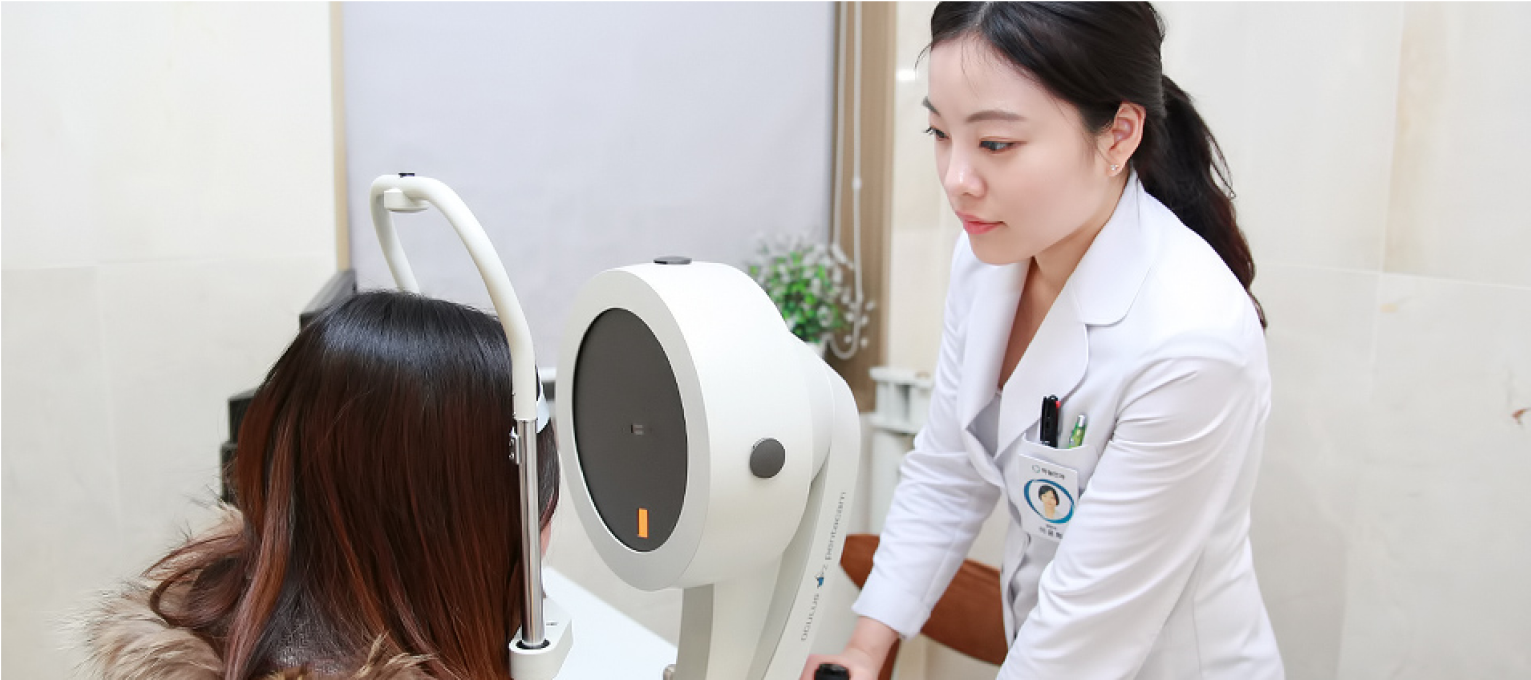
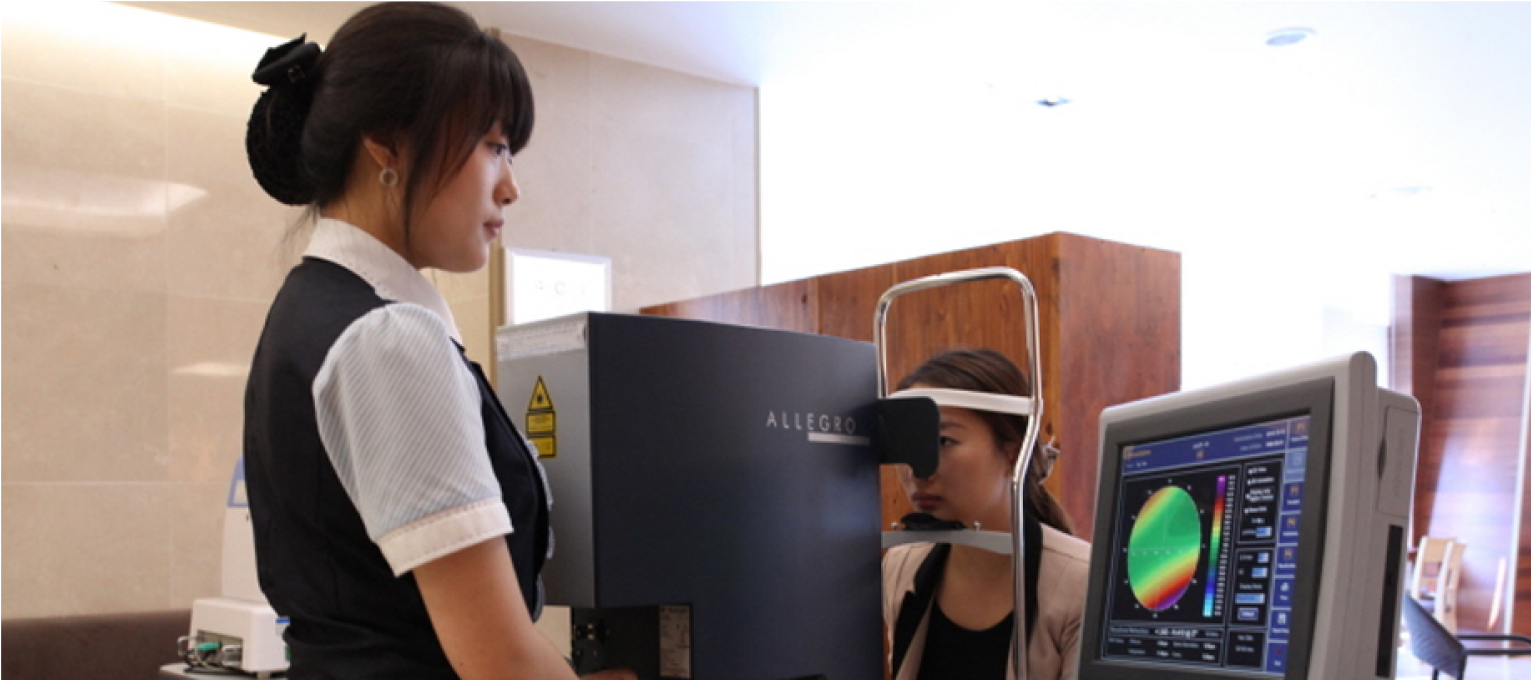
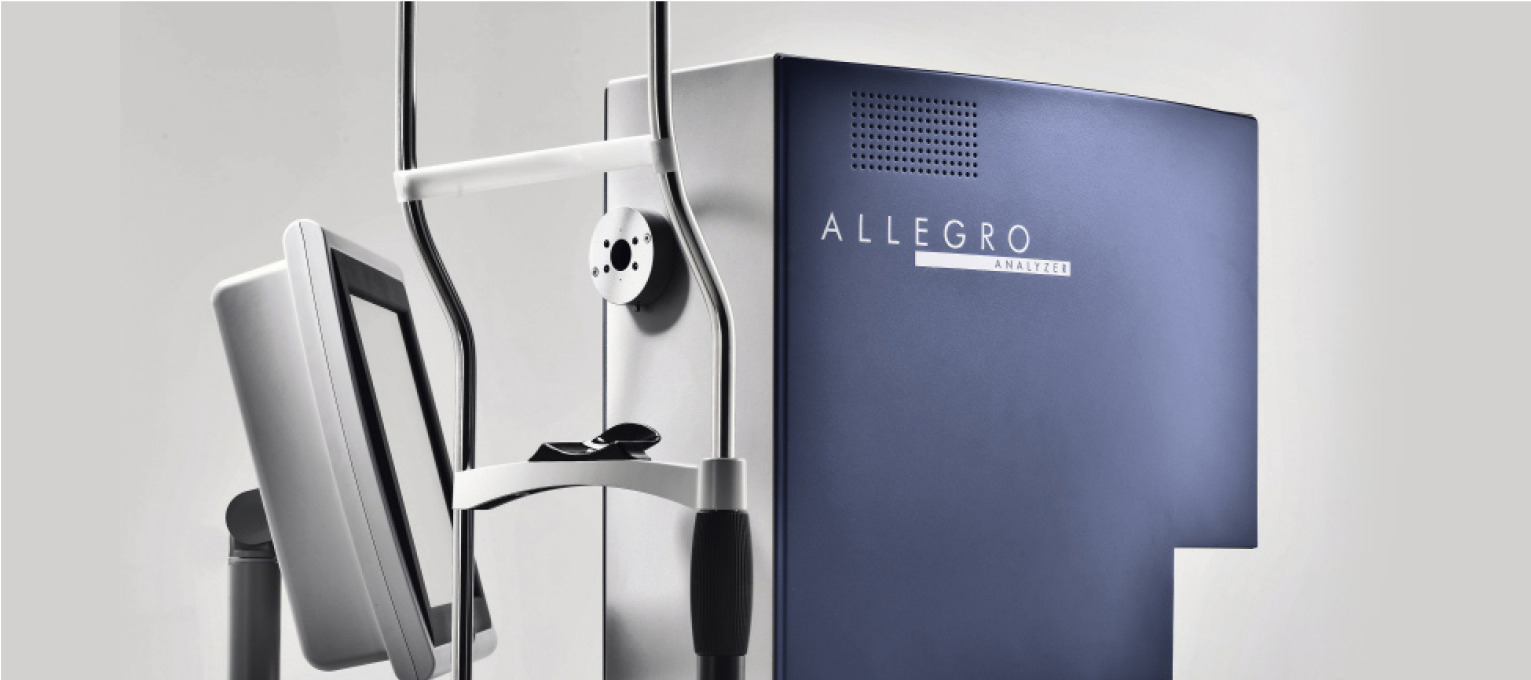
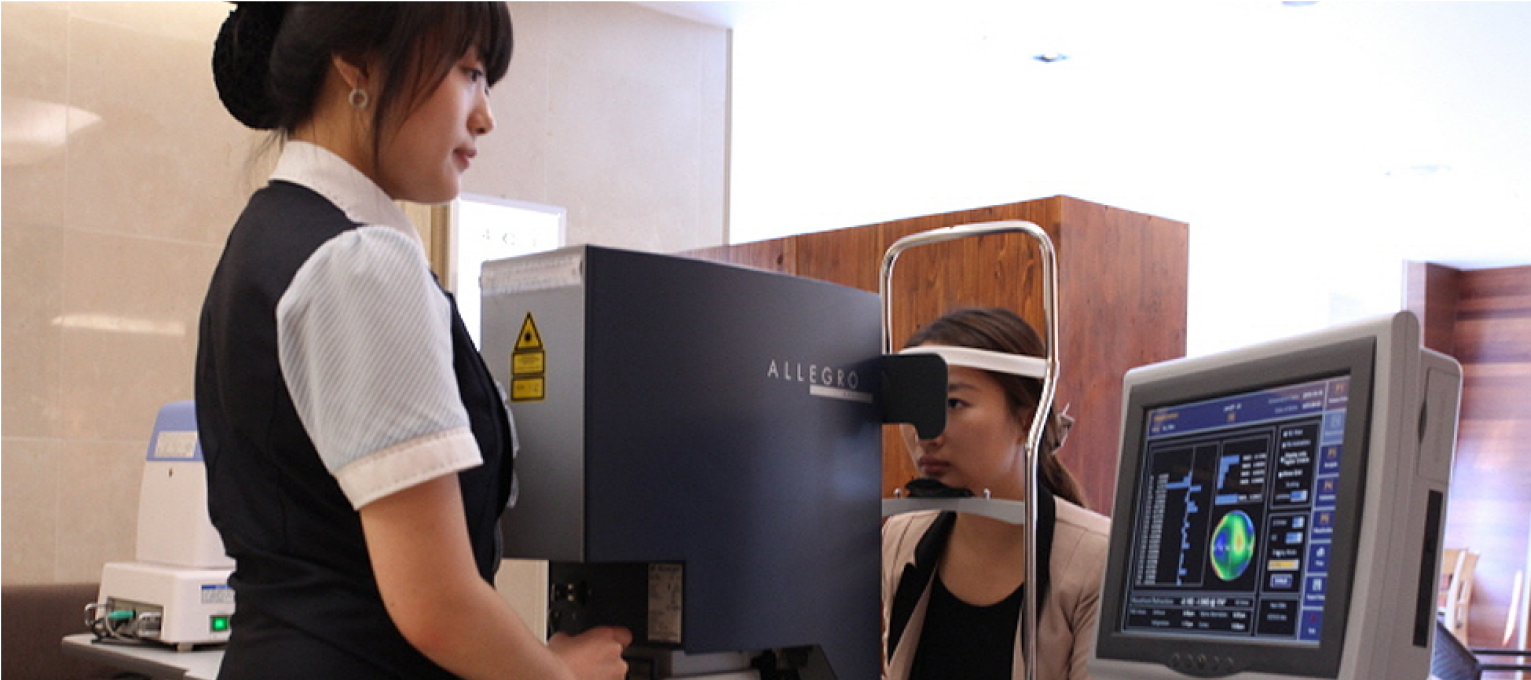
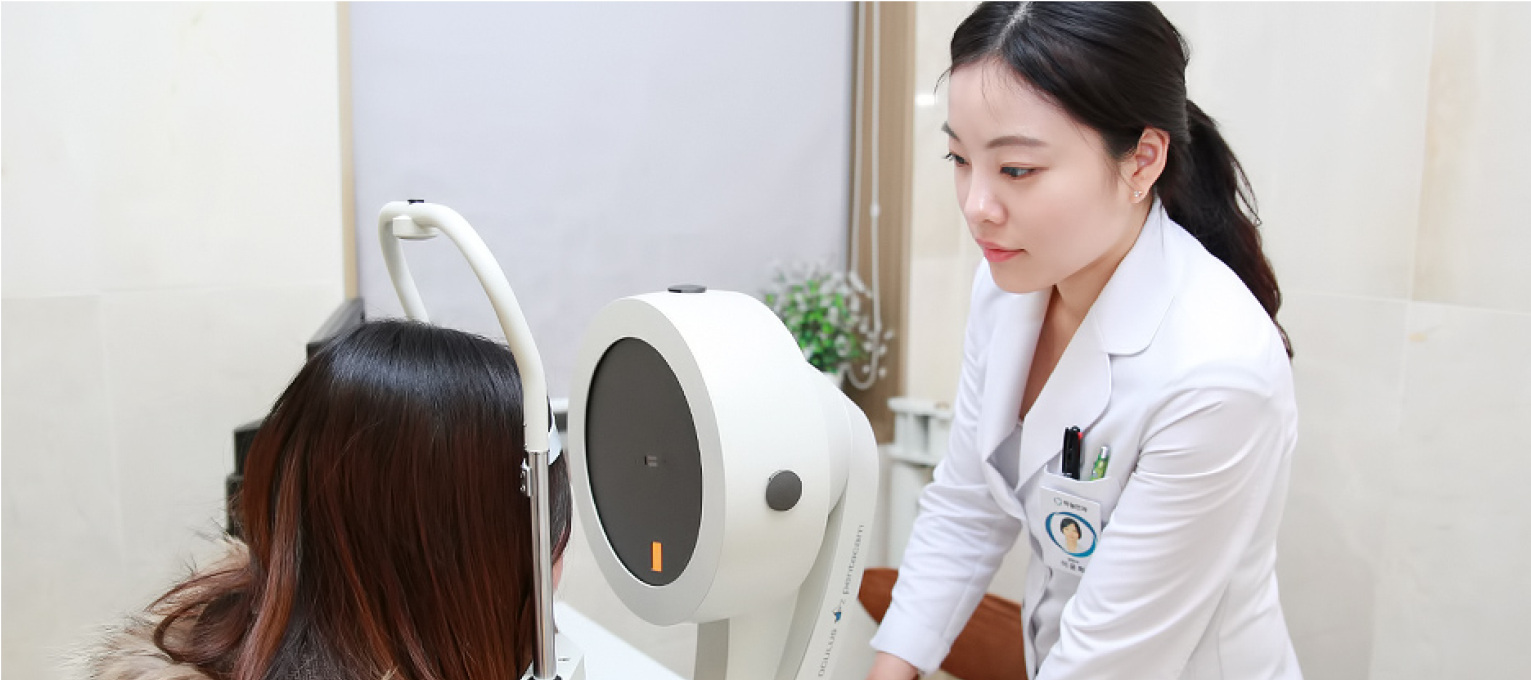
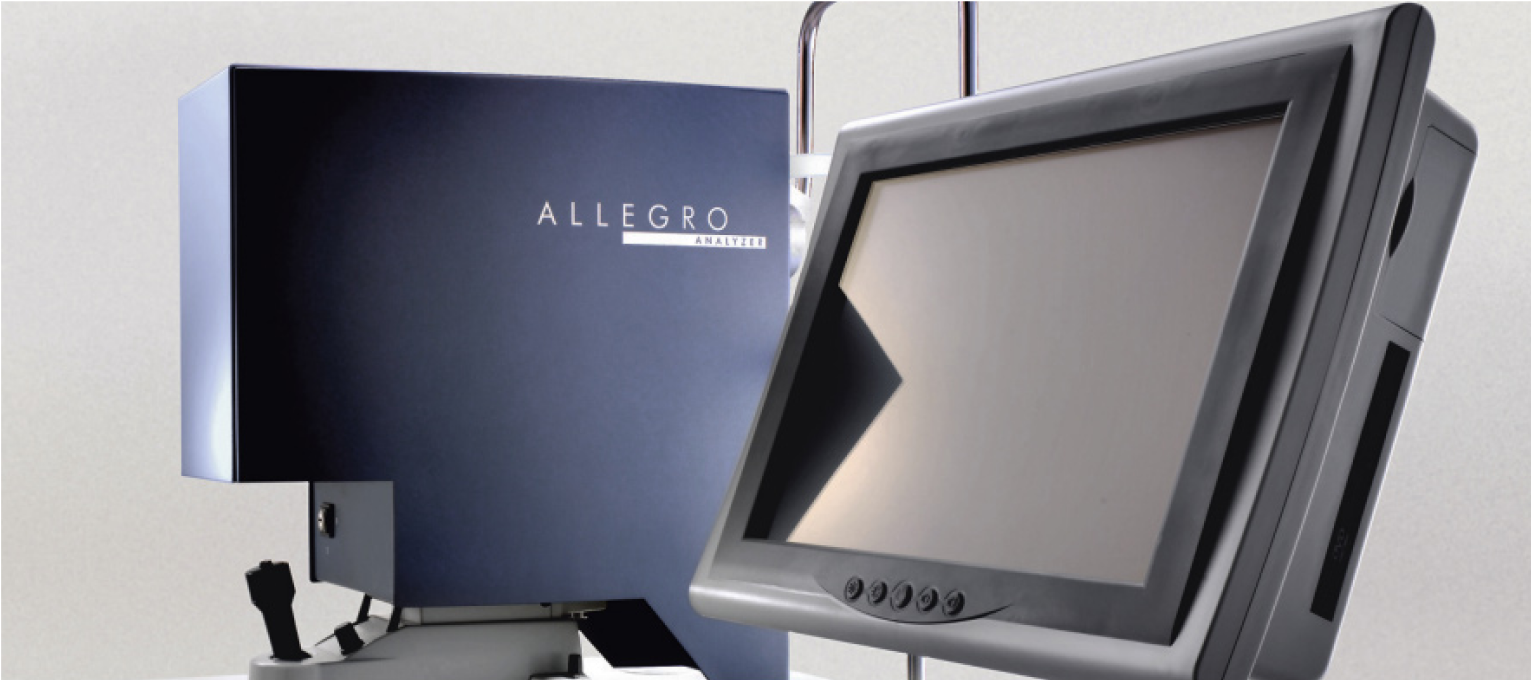
Using the Tscherning method for direct aberration observation with excellent accuracy and reproducibility, this examination precisely analyzes the anterior/posterior corneal surfaces, myopia, astigmatism, and higher-order aberrations that cause vision disturbance.
(CORNEAL WAVEFRONT)
This precision examination divides the cornea into thousands of small points, passes light through them, and calculates the error of light reflected from the retina to determine each individual's degree of aberration.
(OCULAR WAVEFRONT)
The ocular wavefront examination diagnoses not only refractive errors (lower-order aberrations) such as myopia, astigmatism, and hyperopia, but also micro-refractive errors (higher-order aberrations) caused by light distortion from the cornea, pupil, lens, and retina.


This method examines the optic nerve area at the back of the eye through a special microscope with the pupil dilated.
This examination provides detailed confirmation not only of glaucoma but also of optic nerve damage.
Since visual field tests often fail to detect abnormalities until glaucomatous optic nerve damage has progressed to some extent, optic nerve examination is more important than visual field testing for early glaucoma diagnosis.
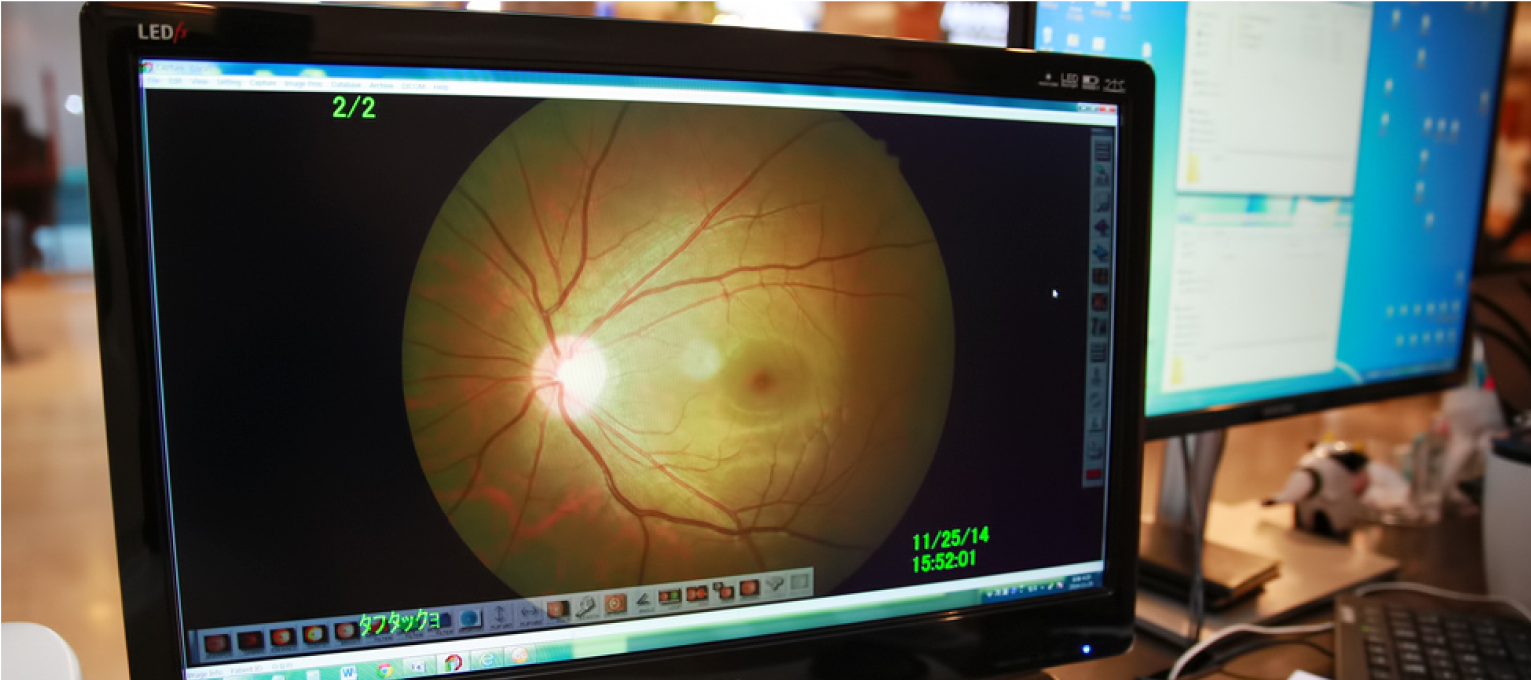
Retinal examination is a basic precision examination performed when retinal abnormalities are suspected, checking the optic nerve, macula, and retinal vascular condition to confirm retinal weakness or degeneration.
Depending on the suspected disease, additional examinations are determined for confirmation and detailed information for future treatment.


This examines the corneal curvature radius and refractive power, checking corneal shape and flatness to identify keratoconus and provide important data for creating corneal flaps in LASIK surgery.
After the initial corneal curvature test, overall aspects are checked through corneal topography.
This test measures corneal thickness using ultrasound. During surgery, the cornea is ablated to achieve normal refractive values, with more thickness corrected for worse vision.
However, correction is not unconditional - safe corneal thickness must be secured for the eye to withstand intraocular pressure. This test accurately measures corneal thickness and is essential for surgery.
This test measures corneal thickness using ultrasound. During surgery, the cornea is ablated to achieve normal refractive values, with more thickness corrected for worse vision.
Safe corneal thickness must be secured for the eye to withstand intraocular pressure. This test accurately measures corneal thickness and is essential for surgery.
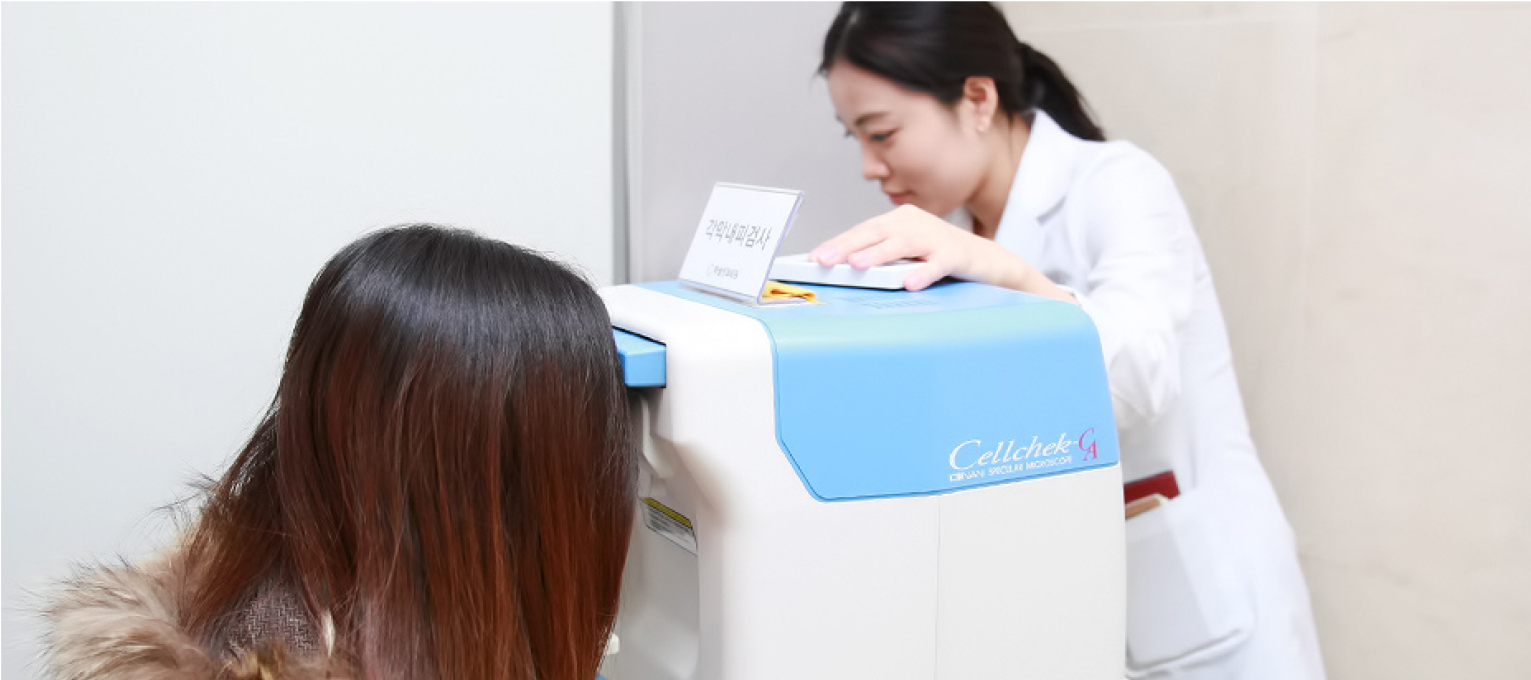
Corneal endothelial cells are polygonal cells located in the innermost layer, with approximately 2,000 or more cells per mm² in adults, mostly appearing hexagonal.
These cells play a crucial role in maintaining corneal transparency. We examine these corneal endothelial cells to ensure accurate and safe surgery.
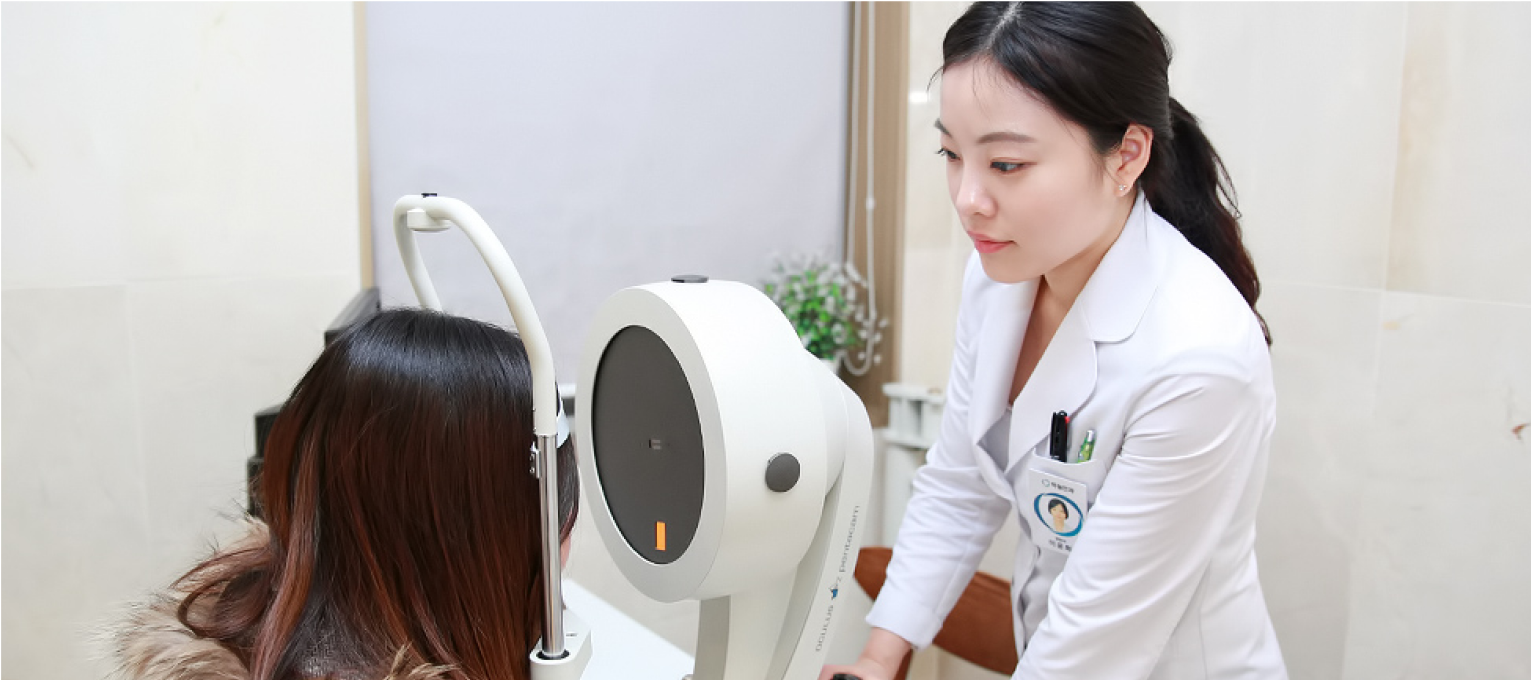
This examination checks corneal topography, curvature, refractive power, thickness, shape, and corneal diseases such as keratoconus. By accurately analyzing the posterior corneal surface, it can detect diseases like keratoconus early, greatly contributing to surgical safety.
DNA genetic testing confirms whether you genetically carry Avellino corneal dystrophy, a type of corneal dystrophy. Avellino corneal dystrophy is a serious hereditary corneal disease that can lead to blindness depending on the type.
If someone with corneal dystrophy undergoes vision correction surgery, results can rapidly deteriorate and vision may be lost in a short time, making prevention through DNA testing important.
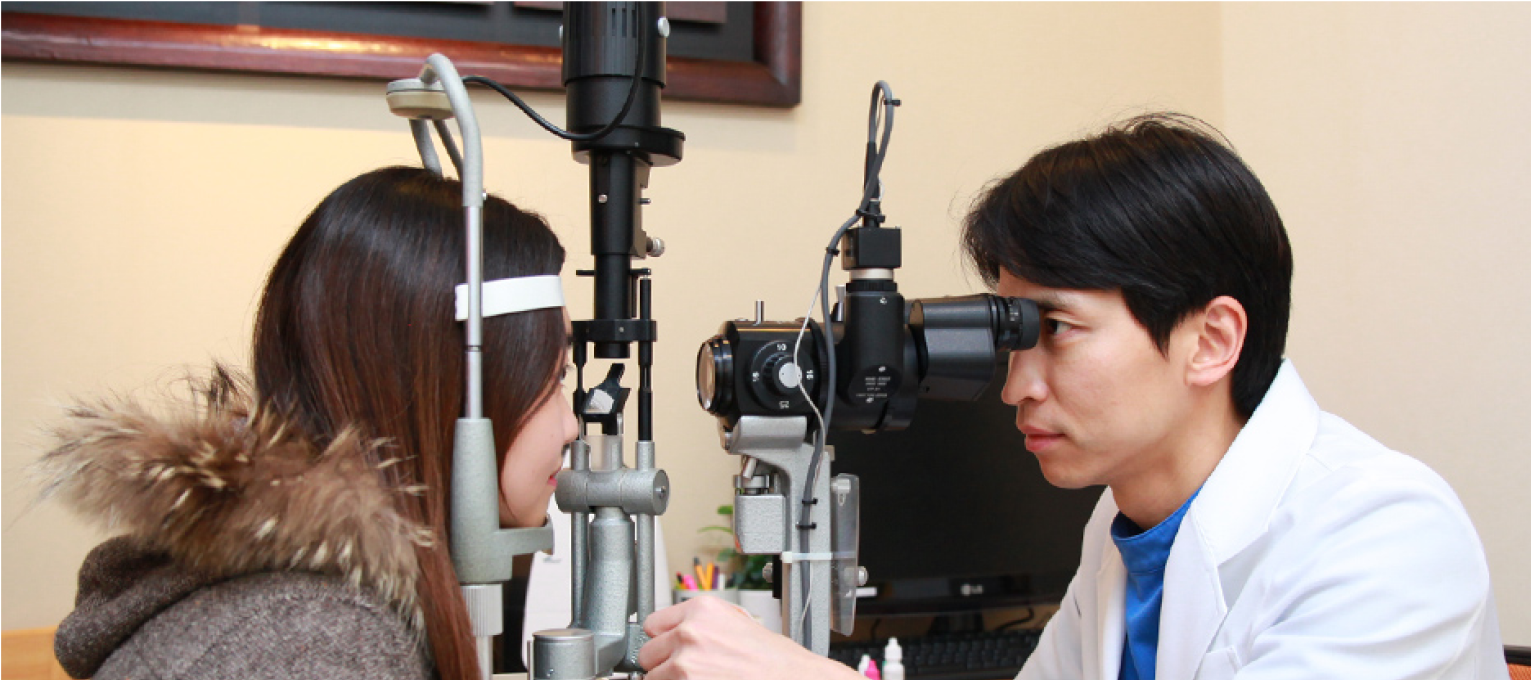
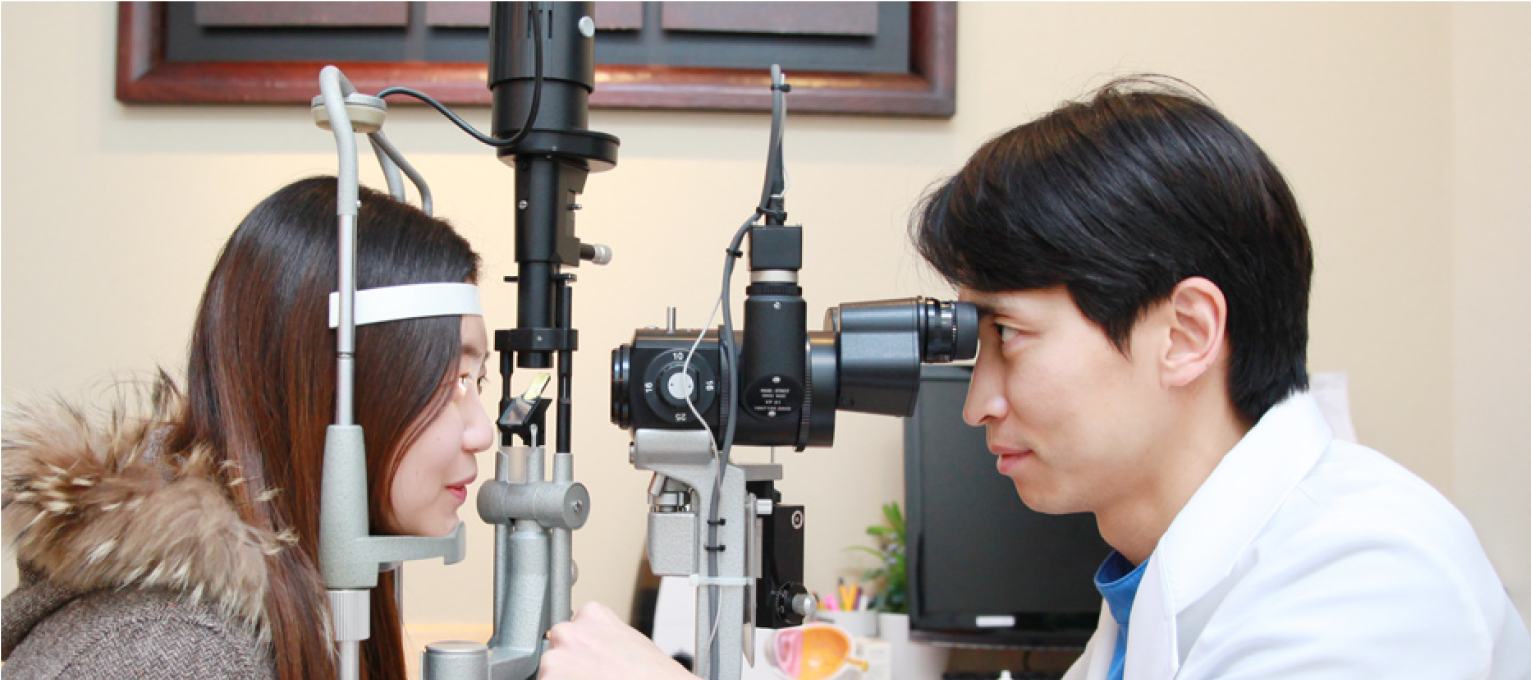
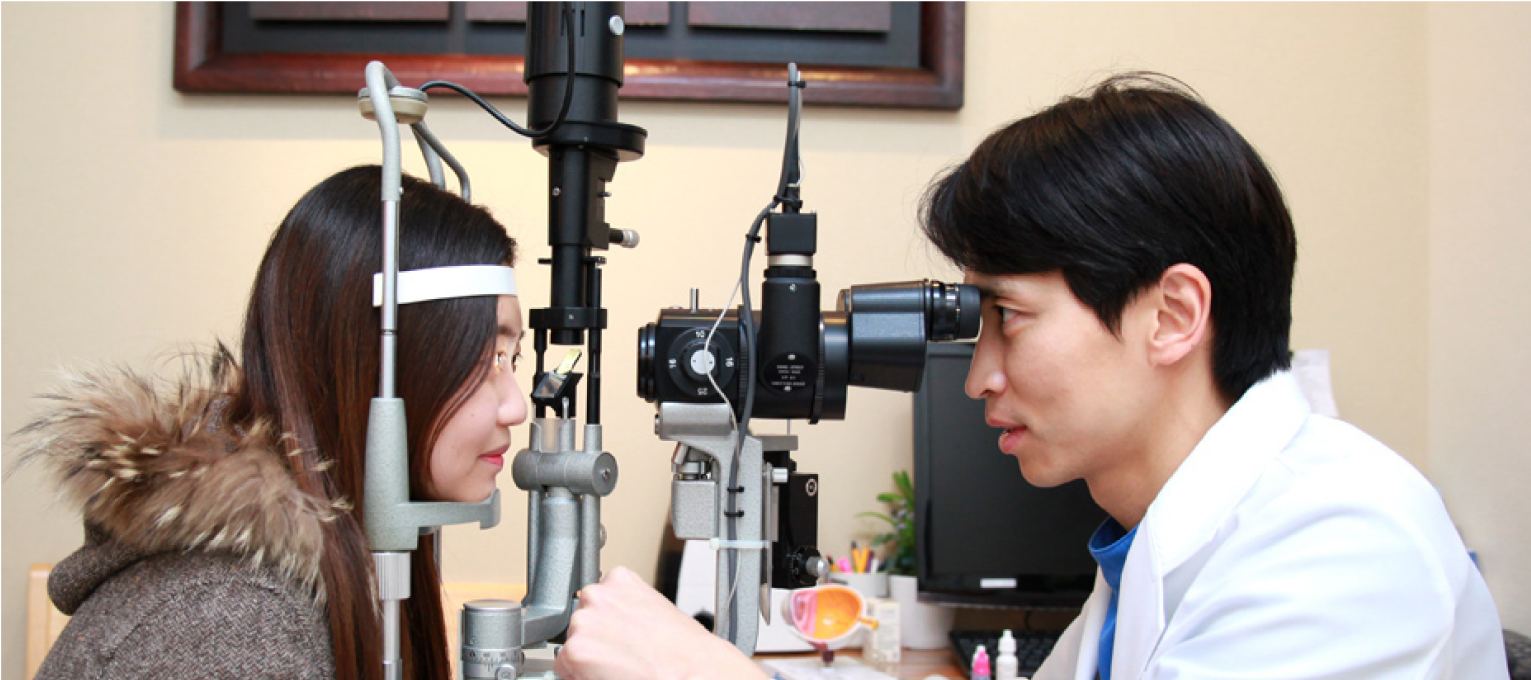
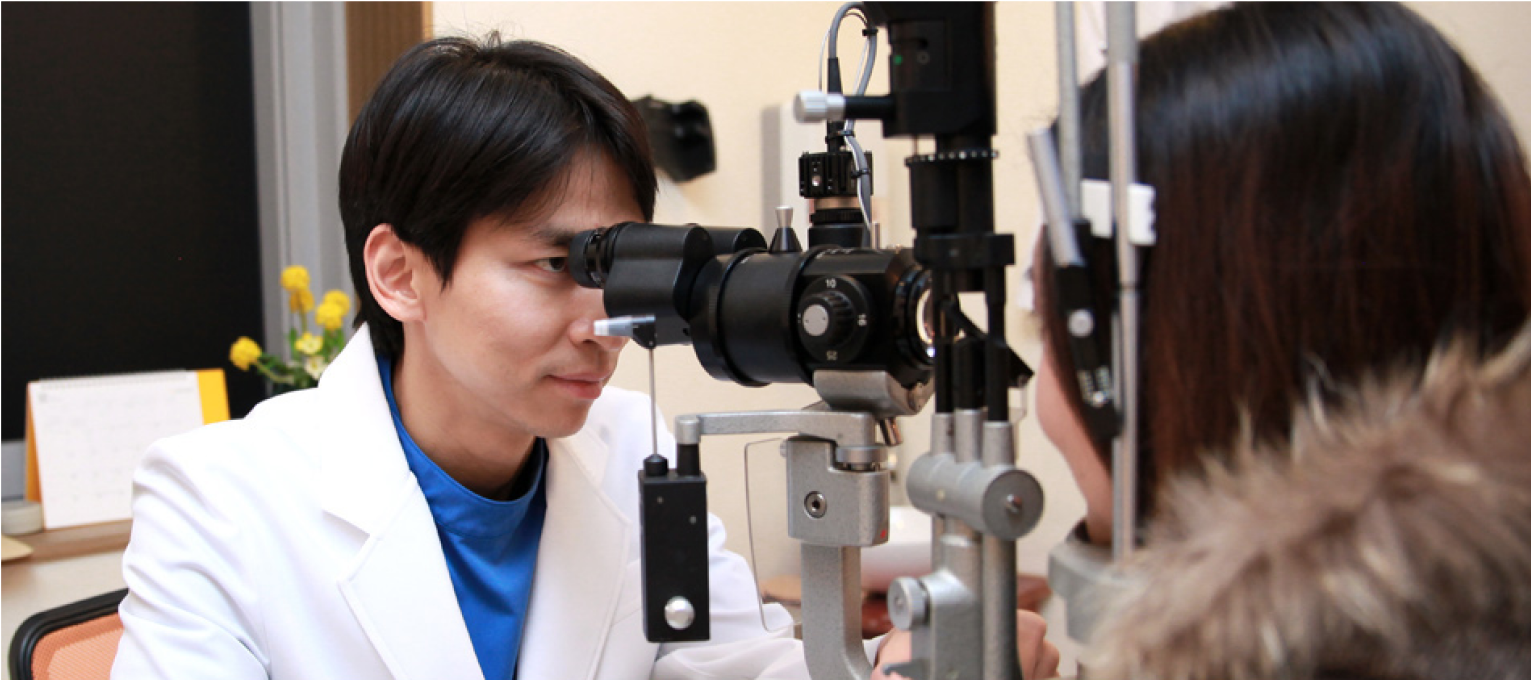
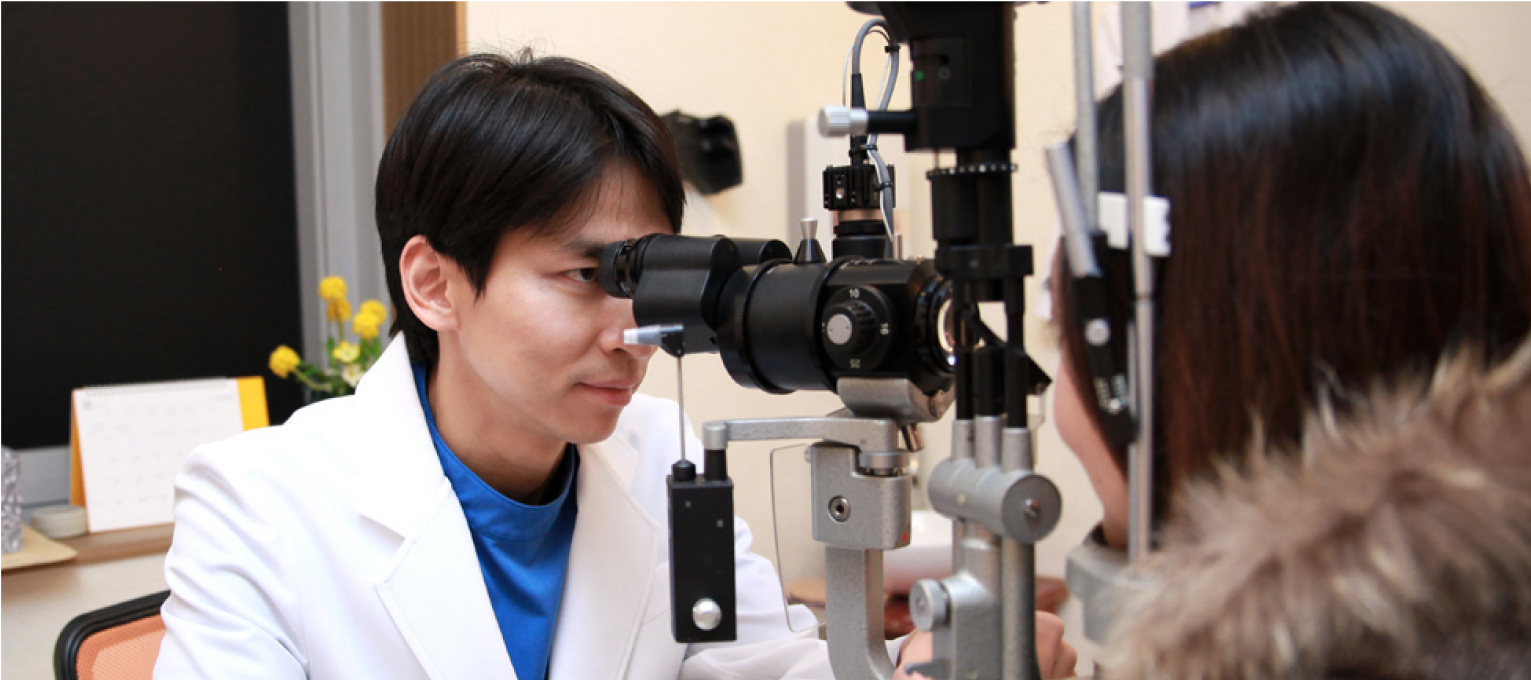
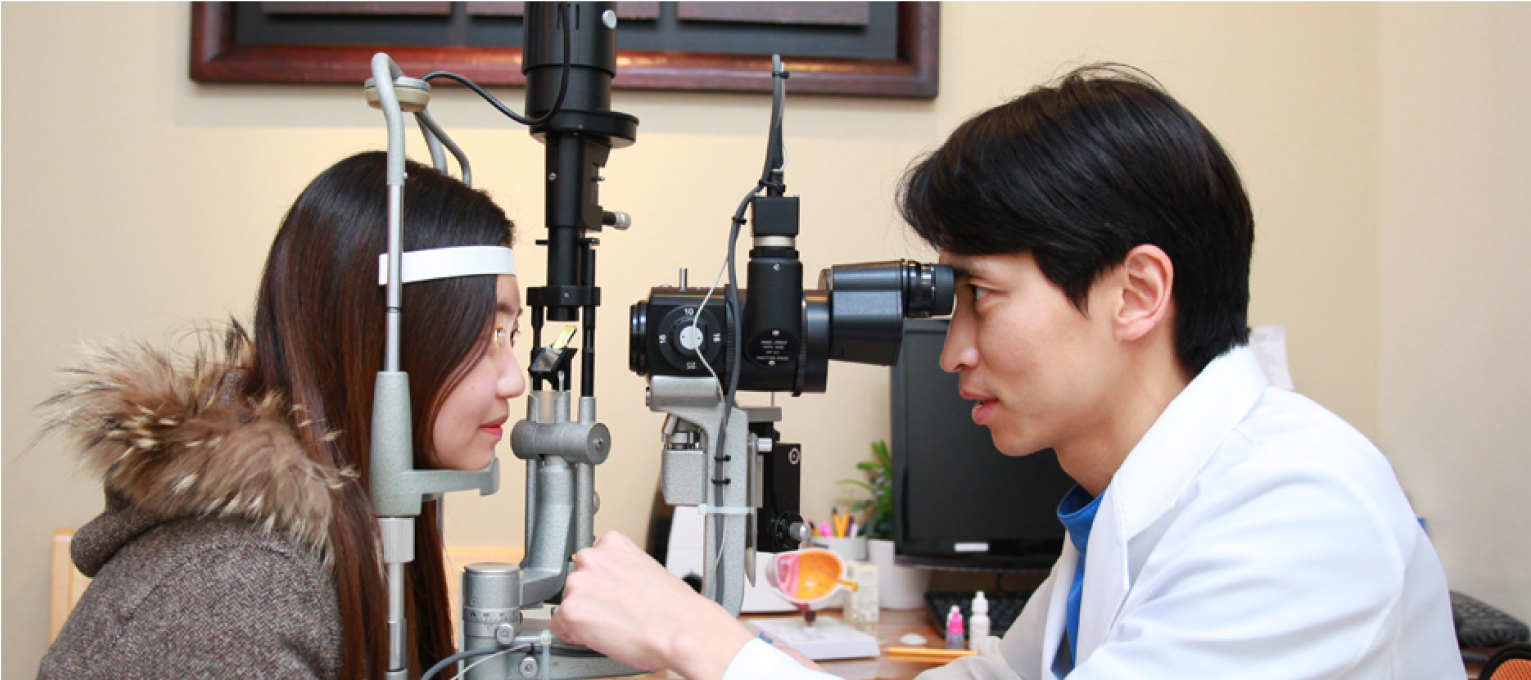
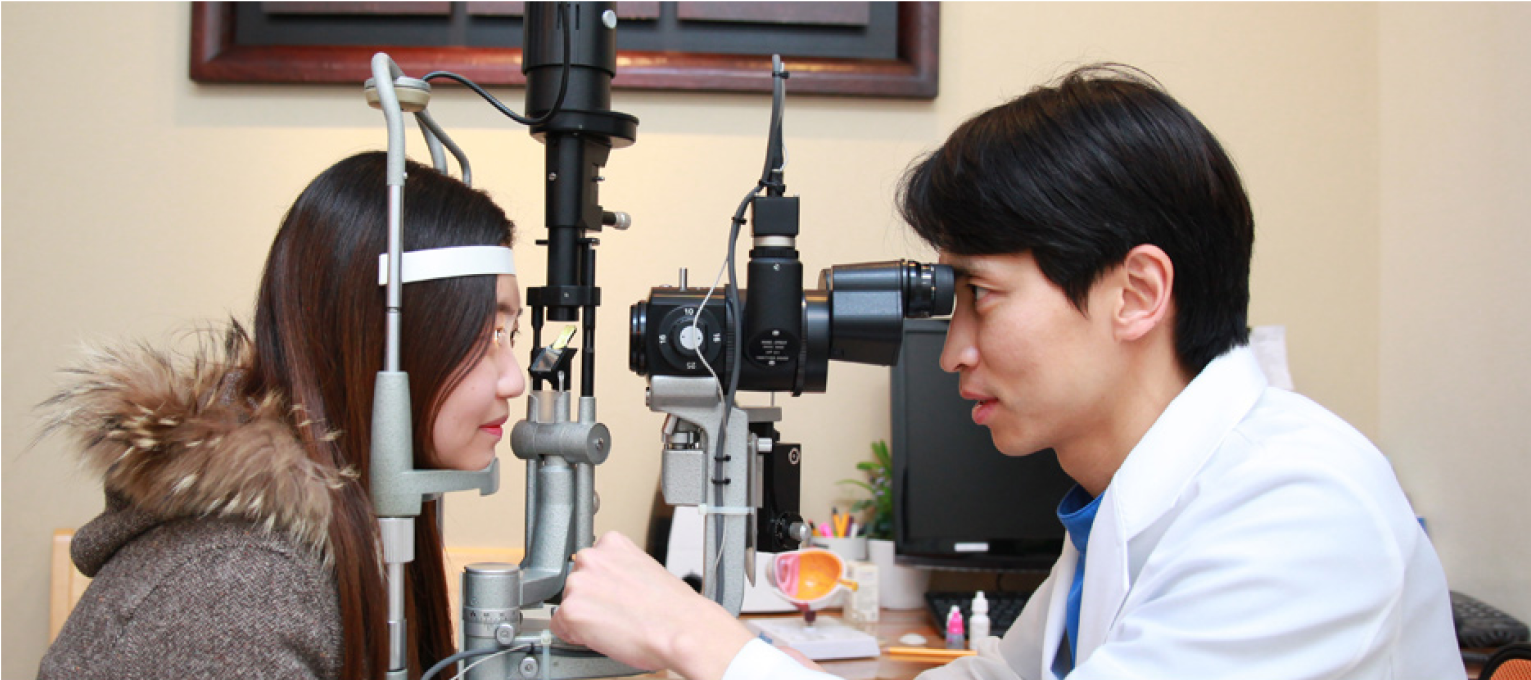
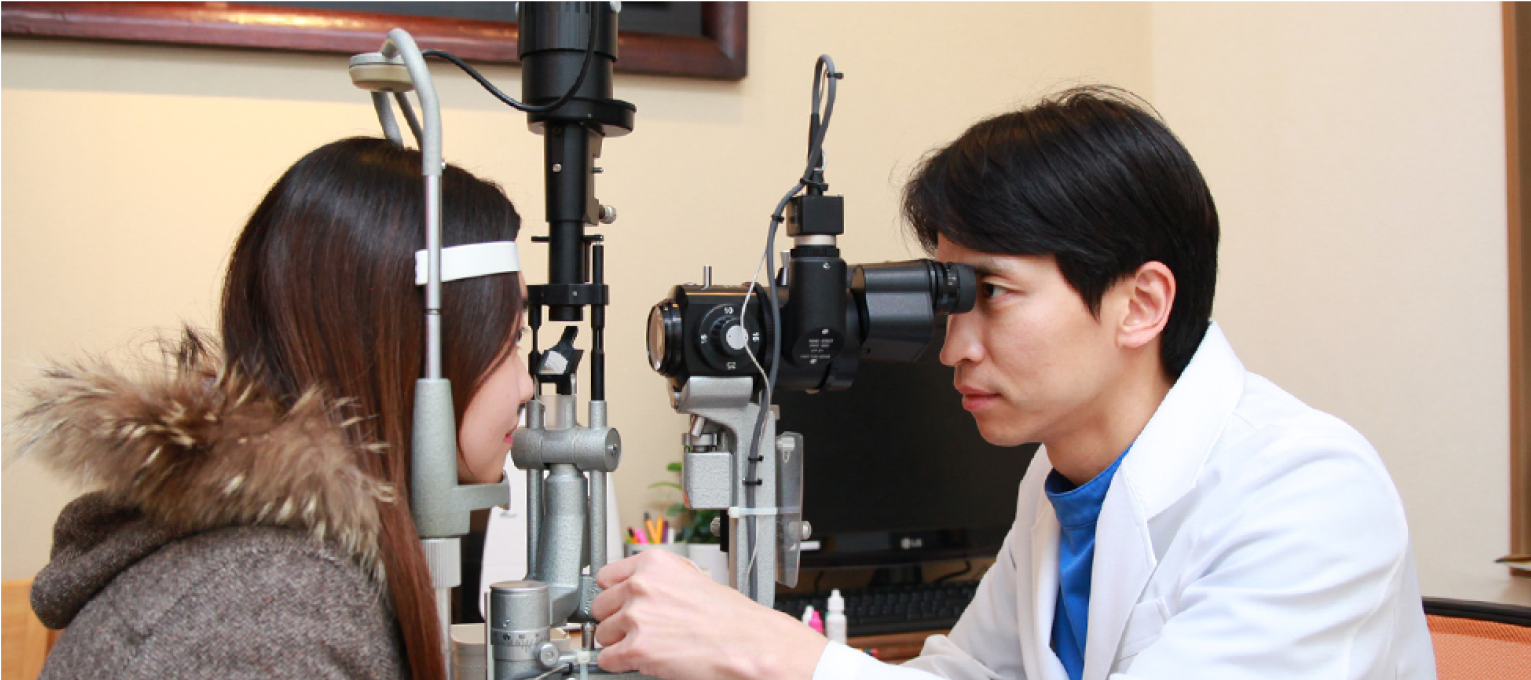
Slit-lamp examination is the most basic and important examination that can determine the presence of corneal diseases, including Avellino corneal dystrophy, scars from keratitis, cataracts, conjunctivitis, and erosion from dry eye, assessing the overall condition of the cornea.


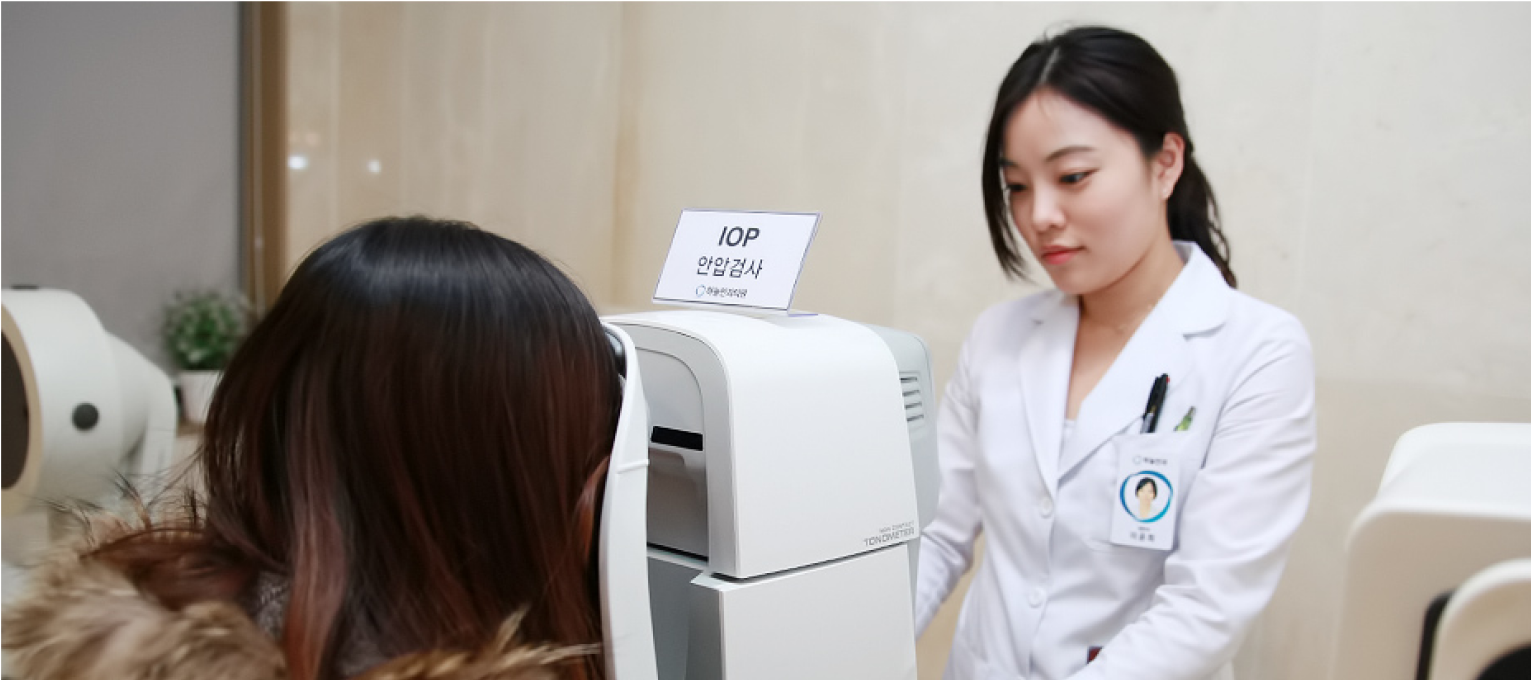
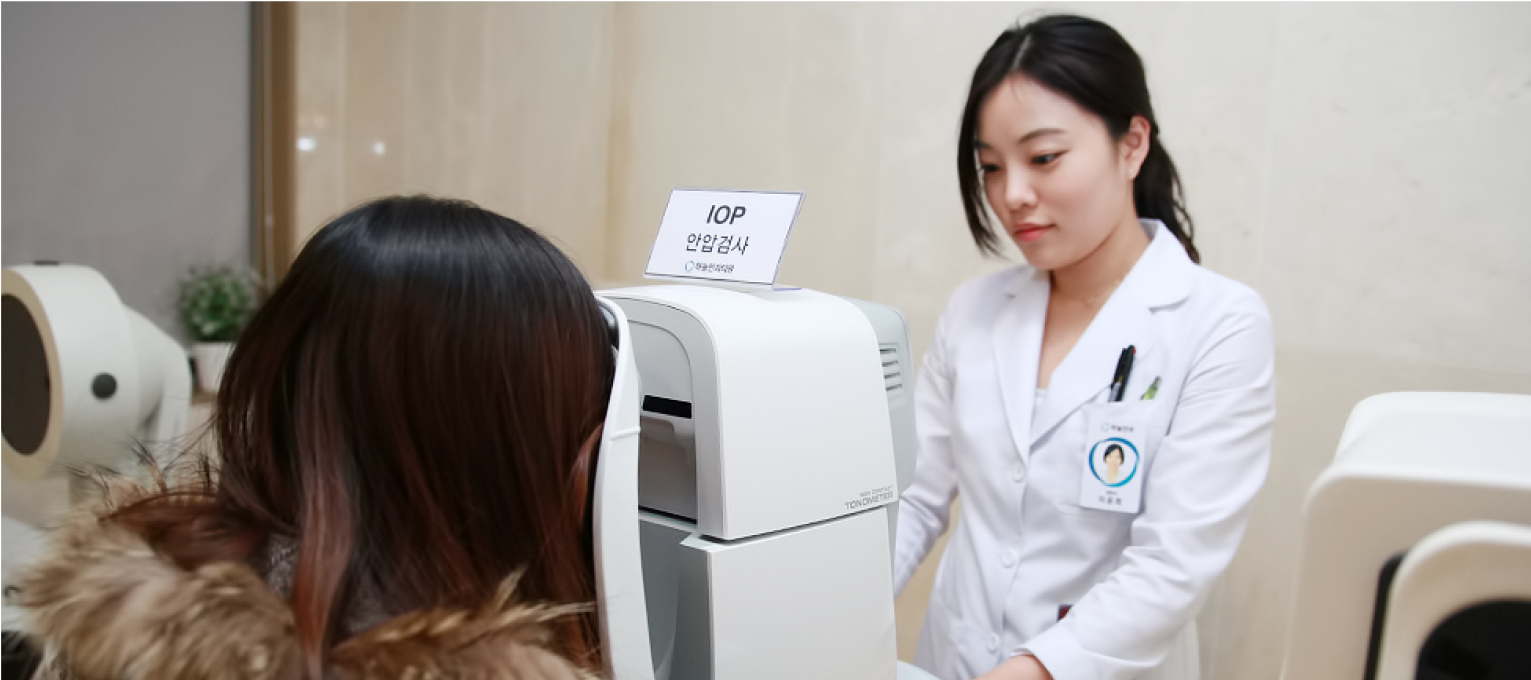
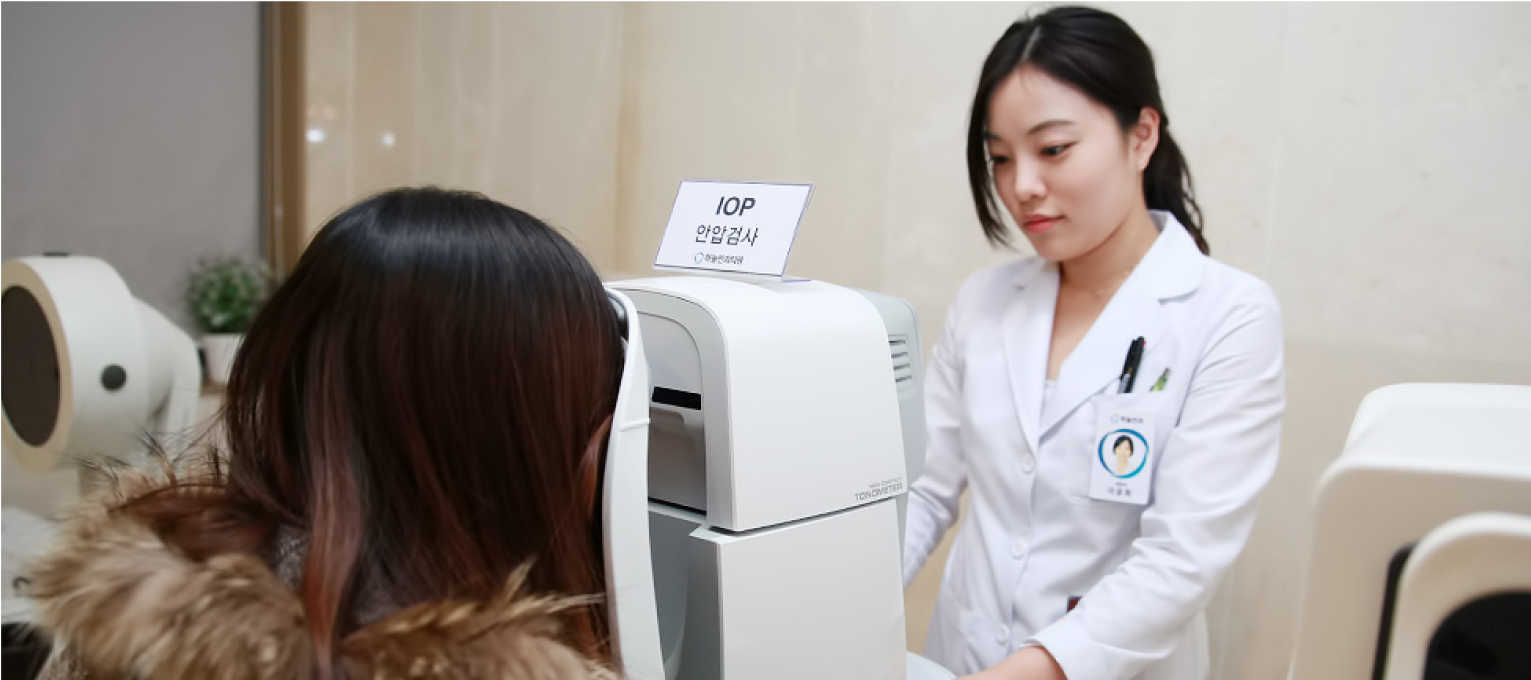
This test measures the pressure inside the eye to determine glaucoma status and optic nerve condition. Intraocular pressure measurement provides important data for diagnosing glaucoma.
This essential examination tests light response to diagnose and track glaucoma or retinal abnormalities.
Visual field refers to the up, down, left, and right range visible when focusing on a point straight ahead. Abnormal findings in visual field tests can diagnose glaucoma.
If diagnosed with glaucoma, caution is needed for vision correction surgery.
Through optic nerve and retinal tomography, this examination can detect serious eye diseases such as retinal disease and glaucoma at an early stage.
It enables early disease diagnosis and can also discover other diseases related to certain eye conditions.
Glaucoma often occurs when elevated intraocular pressure causes optic nerve atrophy.
However, normal-tension glaucoma exists even with normal intraocular pressure.
Therefore, even with normal intraocular pressure, special lenses must be used to observe optic disc cupping or optic nerve atrophy, and if abnormalities are found, surgery decisions must be made carefully.


This uses ultrasound to examine the inside of the eye.
It measures axial length, anterior chamber depth, and lens thickness needed for cataract surgery or phakic IOL implantation.
Using ultrasound reflection waves, this observes the presence, shape, location, and extent of lesions inside the eye.
Auto-refraction test measures the degree of refractive error in the eye, forming the basis for surgery. It is an essential pre-operative test for refractive surgery, diagnosing myopia, hyperopia, astigmatism, and other refractive errors.
This test determines the patient's uncorrected visual acuity and best-corrected visual acuity achievable with glasses, identifying myopia, astigmatism, and hyperopia values.
Slit-lamp examination is the most basic and important examination that can determine the presence of corneal diseases, including Avellino corneal dystrophy, scars from keratitis, cataracts, conjunctivitis, and erosion from dry eye, assessing the overall condition of the cornea.
This test measures the pressure inside the eye to determine glaucoma status and optic nerve condition. Intraocular pressure measurement provides important data for diagnosing glaucoma.


Night glare or halos complained of after vision correction surgery can occur when pupil size at night is larger than average.
Since these occur when pupil size exceeds the area irradiated by the excimer laser, this test accurately measures pupil size in actual nighttime conditions when pupils are largest, determining corneal flap size and laser irradiation range and method.
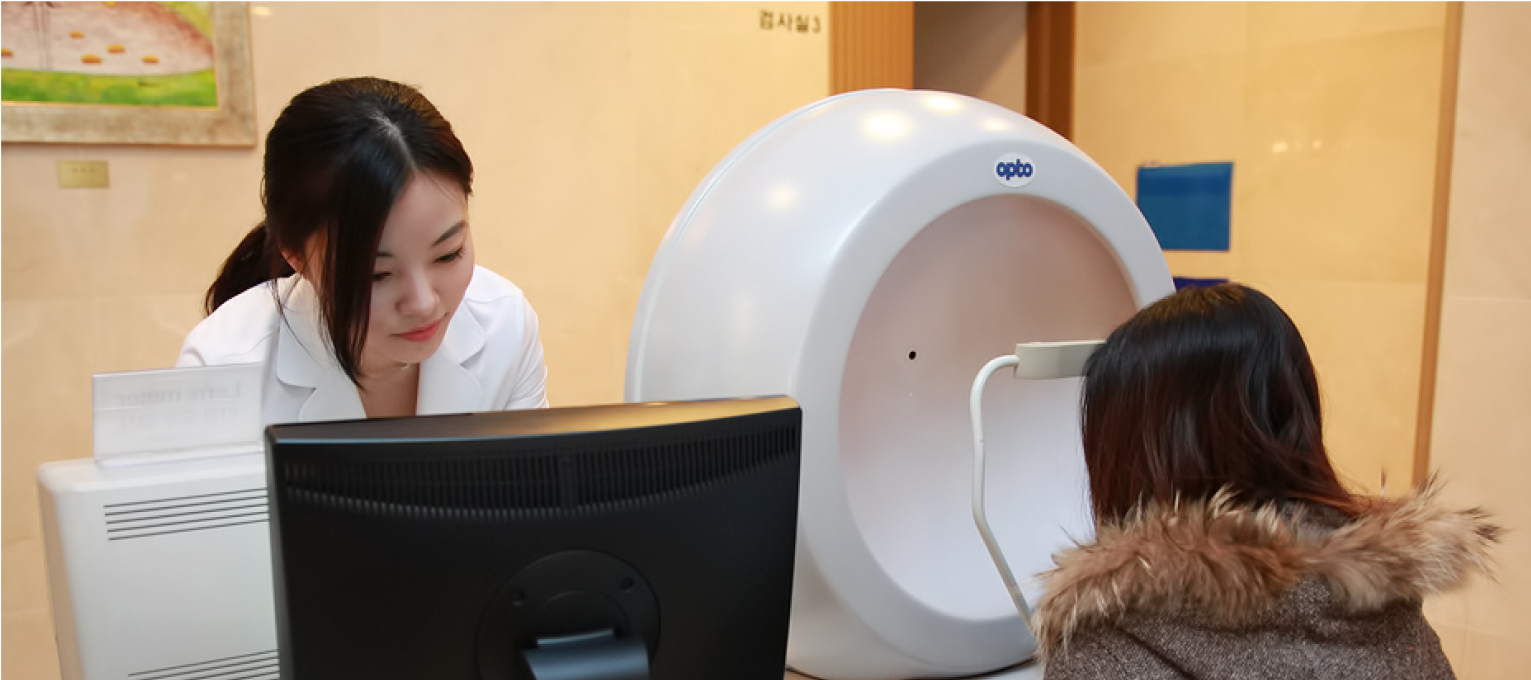
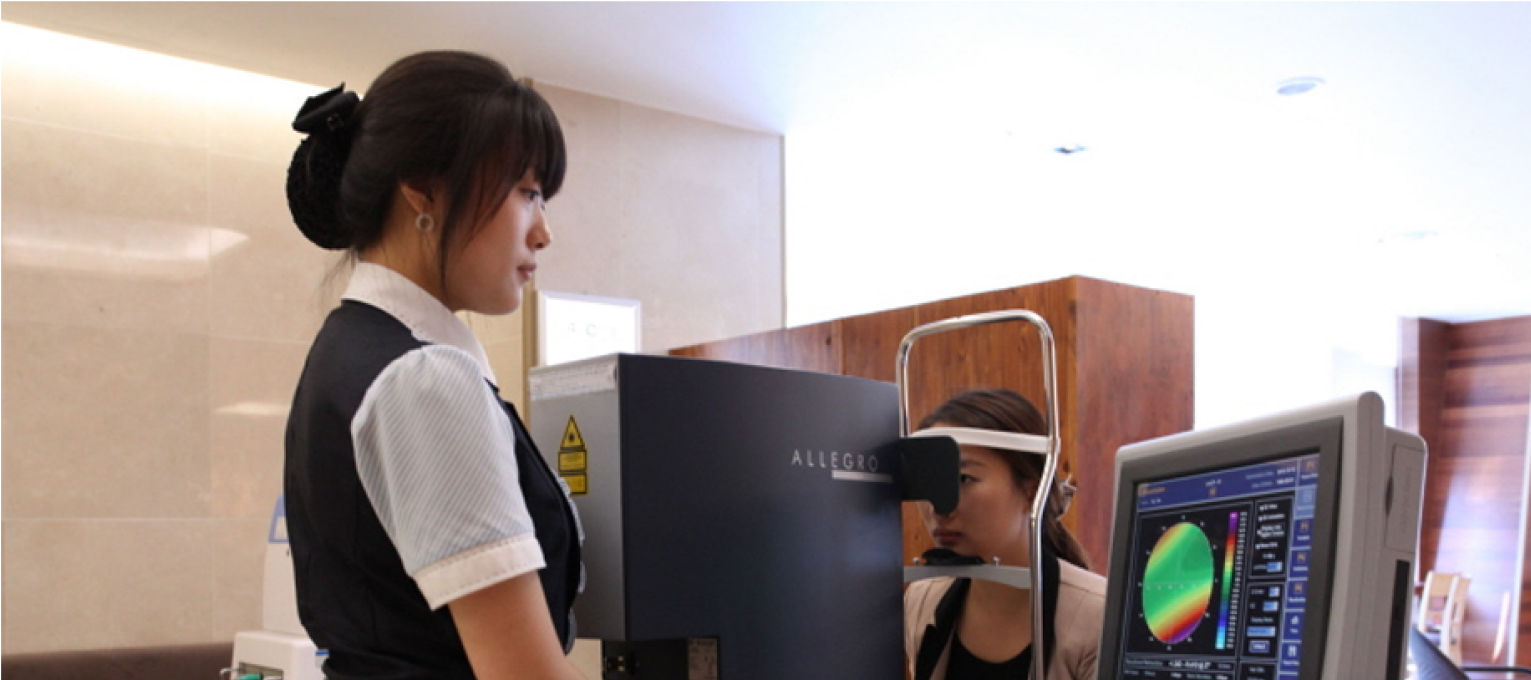
The most important examination enabling custom LASIK surgery, it divides into thousands of small points to pass light and calculate the error of light reflected from the retina.
By accurately analyzing each individual's aberration degree, it can measure and analyze not only cornea but also lens, vitreous, and retina - all refractive errors and higher-order aberration phenomena (light distortion) to obtain custom LASIK data.
Pupil size changes according to light - pupils enlarge in dark places and shrink in bright places.
Night glare or halos sometimes complained of after vision correction surgery can occur when pupil size at night is large.
Therefore, by testing pupil size in advance and conducting thorough pre-operative consultation based on this, we increase patient satisfaction after surgery.
While visual acuity testing using standard eye charts is essential, it is insufficient for evaluating actual visual quality.
Visual acuity measurement using these charts is performed under bright lighting with high-contrast charts, but in real life, objects we see often lack clear contrast with surroundings, causing some patients to complain of poor vision in dark places or difficulty driving at night despite good visual acuity after vision correction surgery.


Corneal examination checks corneal topography, curvature, refractive power, thickness, shape, and corneal diseases such as keratoconus. By accurately analyzing the posterior corneal surface, it can detect diseases like keratoconus early, greatly contributing to surgical safety.
This uses ultrasound to examine the inside of the eye.
It measures axial length, anterior chamber depth, and lens thickness needed for cataract surgery or phakic IOL implantation.
This test determines the patient's uncorrected visual acuity and best-corrected visual acuity achievable with glasses, identifying myopia, astigmatism, and hyperopia values.
Cycloplegic refraction test measures the pure refractive error of the eye by relaxing the ciliary muscle holding the lens, eliminating variable factors such as pseudomyopia or latent hyperopia.
Post-cycloplegic refraction test is a manifest refraction test performed 3-4 days after the cycloplegic refraction test when the medication effect has worn off.
This test reconfirms the refractive error status including myopia, astigmatism, and hyperopia.
Normal intraocular pressure is usually 10-21mmHg, and elevated pressure causes glaucoma, which damages the optic nerve.
Therefore, intraocular pressure measurement provides important data for diagnosing glaucoma.
This method examines the optic nerve area at the back of the eye through a special microscope with the pupil dilated.
This examination provides detailed confirmation not only of glaucoma but also of optic nerve damage.
Since visual field tests often fail to detect abnormalities until glaucomatous optic nerve damage has progressed to some extent, optic nerve examination is more important than visual field testing for early glaucoma diagnosis.
Slit-lamp examination is the most basic and important examination that can determine the presence of corneal diseases, including Avellino corneal dystrophy, scars from keratitis, cataracts, conjunctivitis, and erosion from dry eye, assessing the overall condition of the cornea.
For phakic IOL implantation, it can also check the approximate angle of the posterior corneal surface and corneal size.


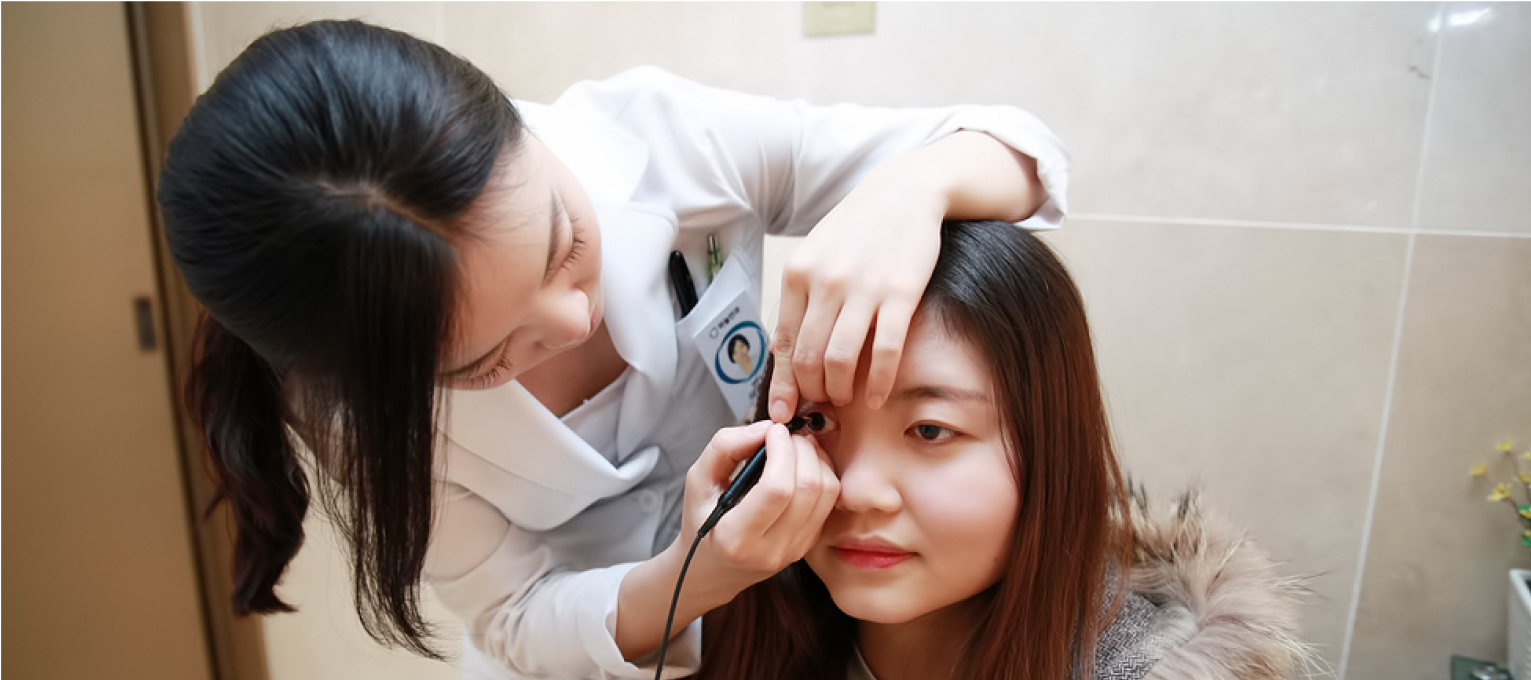
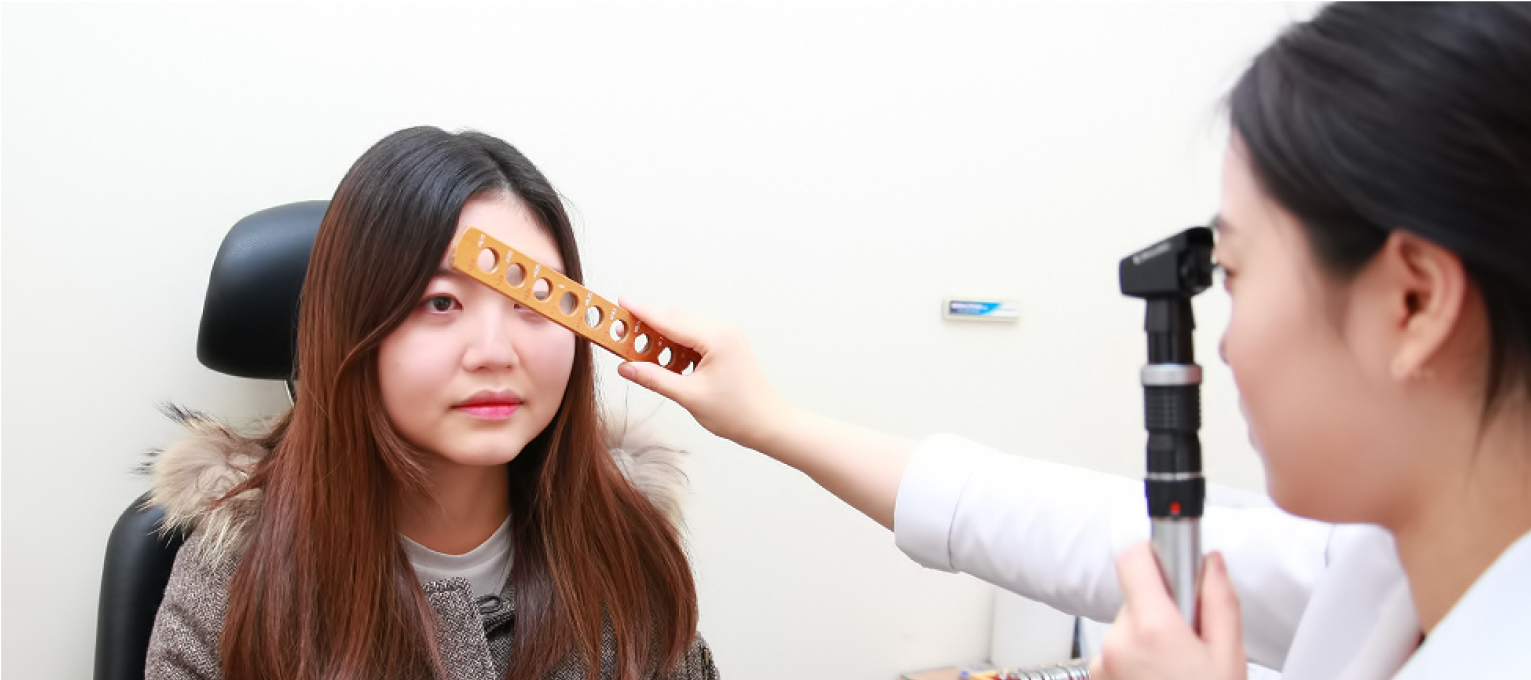
The dominant eye is the eye that plays the leading role between both eyes.
Just as individuals are right-handed or left-handed, eyes are also not used equally.
Like hands, there is a primary eye and a supporting eye, and this test determines which eye is predominantly used.
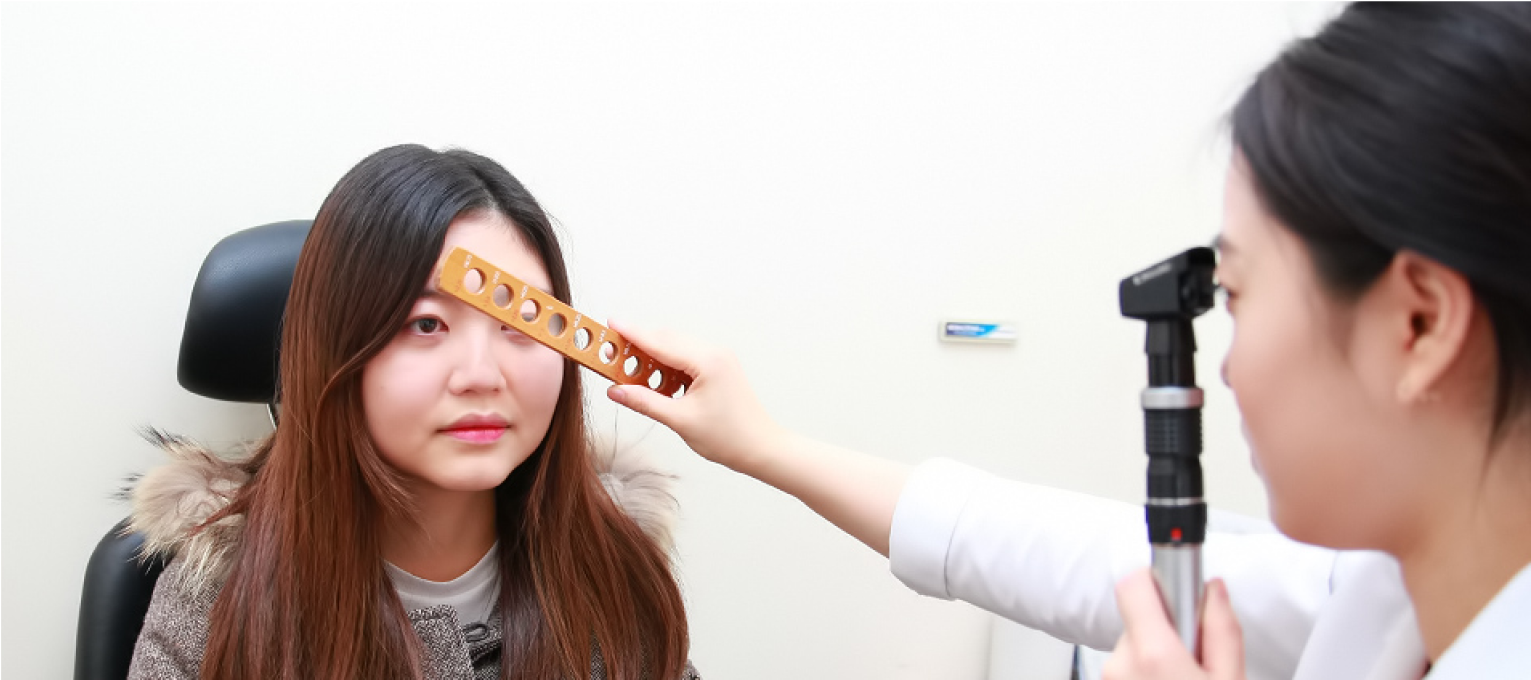
This test checks whether the eye position is normal and whether phoria or strabismus exists.
More than 70% of normal people have slight strabismus or phoria, most of which go unnoticed.
Excessive phoria and strabismus cause discomfort regardless of surgery, so thorough examination is necessary.


After accurately analyzing the patient's eye condition through comprehensive eye examination, we recommend the most suitable surgical method. Among surgery types such as LASEK, LASIK, and phakic IOL implantation, we determine the most suitable surgery based on precision examination, considering eye condition, occupation, and environment, and thoroughly explain the surgical method, recovery period, and post-operative precautions.
Once determined suitable for surgery, carefully consider the recommended surgical method and reserve your surgery date and time.
Surgery reservations can also be made through the website reservation board or by phone.


The information you provide will not be stored or disclosed.
We will contact you by phone in order to assist with your consultation.
10:00 AM ~ 04:30 PM
Closed for equipment inspection
10:00 AM ~ 04:30 PM
10:00 AM ~ 02:30 PM
01:00 PM ~ 02:00 PM
Address | 723-26 Banpo-dong, Seocho-gu
B3, B2, B1, 1F, 2F, 8F, 9F, 10F (Bldg A) / 1F (Bldg B)
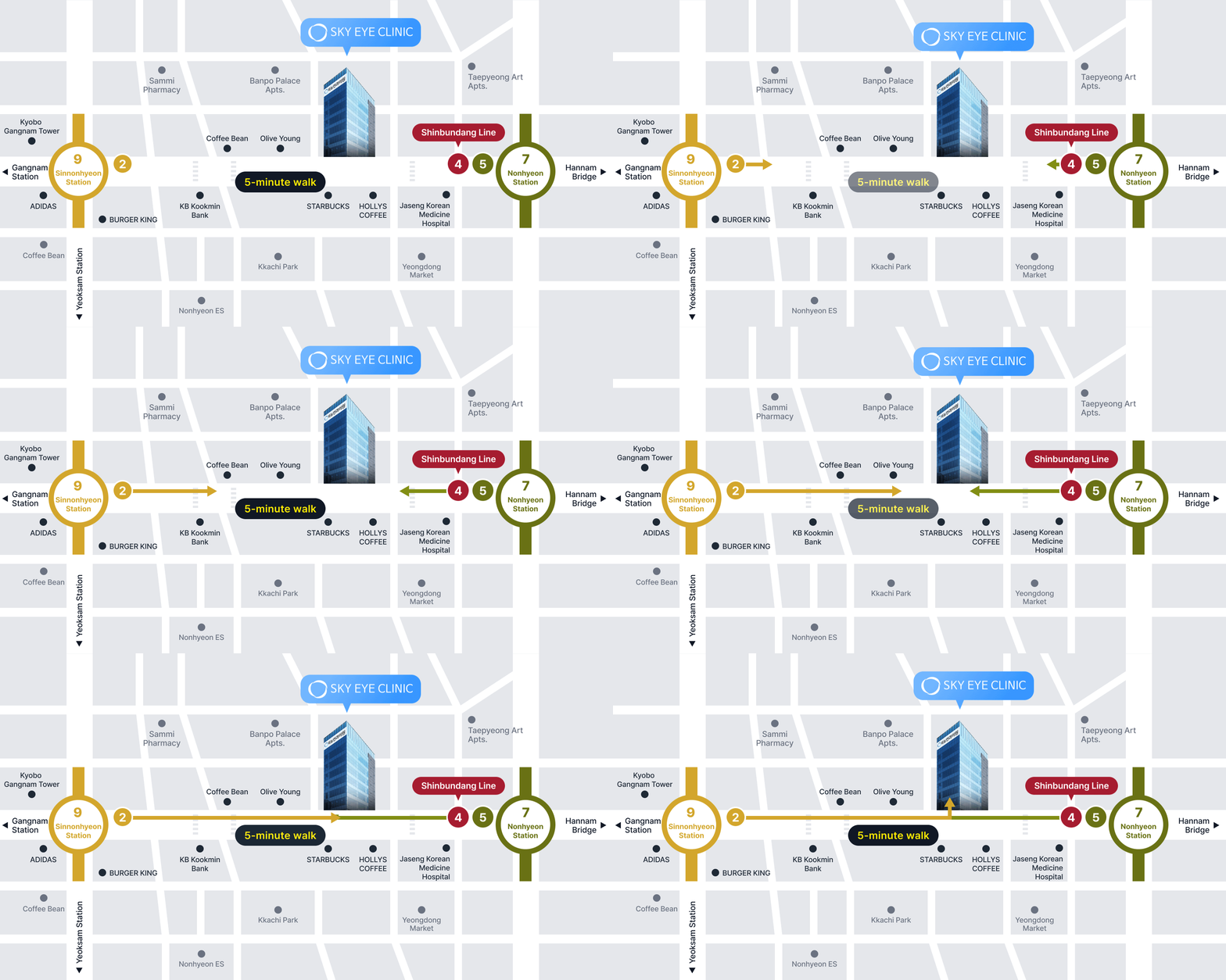
5 min walk from Nonhyeon Station Exit 4
5 min walk from Sinnonhyeon Station Exit 2
Get off at Nonhyeon Station, Yeongdong Market stop
Use the
mechanical parking lot behind the building
(Valet parking fee including parking: 3,000 KRW)